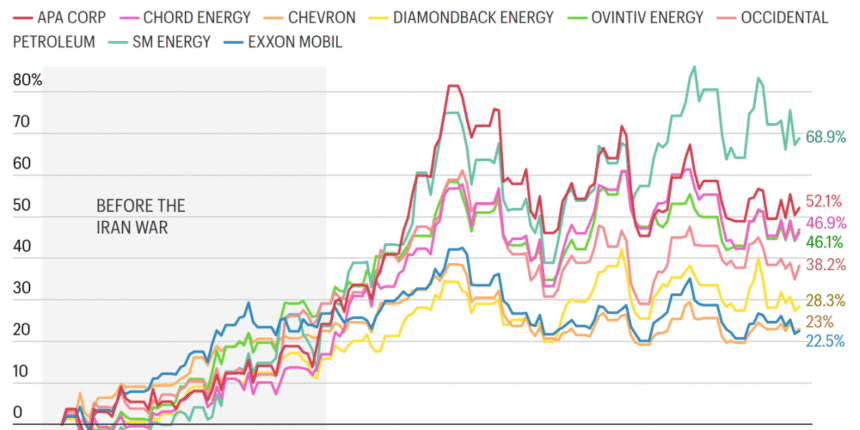
Consumer frustration may be running high as drivers pay well above $4 a gallon at the pump, but the big winners from the Iran war are U.S. oil producers and refiners whose profits and share prices have soared. The stock values of leading U.S. oil players have jumped 20%-70% this year as crude prices and demand spiked—many near all-time highs—and analysts think the rally may not be fleeting.
Even with oil and fuel prices elevated, crude has not spiked to the nearly $200-a-barrel level feared during the greatest energy supply shock in modern history.
Ironically, that resiliency of the energy markets may keep energy prices higher for longer—potentially well into 2028, said Rebecca Babin, senior equity trader for CIBC Private Wealth.
Ever since the first pseudo-ceasefire was announced in early April, energy markets have leaned heavily on emergency reserves while becoming “numb” to chaos and clinging to optimism of a permanent peace deal, she said. Those reserves are still being depleted to dangerously low levels, and refilling them will take even longer on the back end, keeping prices higher for longer.
“We didn’t get the spike to $150, $200 [oil] and, in a way, that’s made this conflict even more bullish for the longer end of the curve,” Babin said.
And she agreed that U.S. barrels will be more highly valued going forward. “There is probably a bigger pull on U.S. barrels because I want to have that secure barrel without a lot of risk premium built in.”
If anything, Wirth said, many countries will want to build their emergency reserves even higher after the war, desiring a larger safety net and greater redundancy, putting even more demand on oil barrels.
Relying on emergency reserves means the nation’s SPR is shrinking to its lowest volumes since 1983 this week.
As of June 5, the administration has drained 66 million barrels and counting from the SPR since the war in Iran began, according to the Department of Energy. Trump has authorized the overall release of 172 million barrels over several months. The companies buying the barrels are pledging to replenish them.
There is now a greater belief that the world may require more oil in the years ahead before oil demand eventually peaks amid rising electric vehicles and electrification. Many of the top oil producers are realizing they need to invest more—not less—in global exploration, said James West, Melius Research energy analyst.