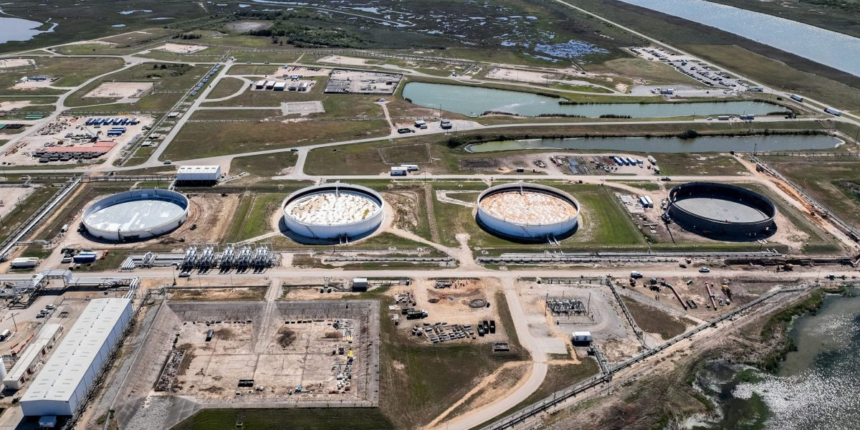
The nation’s emergency reserve for oil and fuel supplies is slipping below Biden-era lows to its most exhausted level since the Reagan era—when the nearly 50-year-old U.S. Strategic Petroleum Reserve was still being filled up.
“It’s a pretty monumental number to hear multidecade lows reached,” De Haan told Fortune. “The longer this goes on the fewer tools the administration has in dealing with it and the more risk there is to a slingshot for costs.”
The administration has drained 66 million barrels—as of June 5—and counting from the SPR since the war in Iran began, according to the U.S. Department of Energy. Trump has authorized the overall release of 172 million barrels over several months. The companies buying the barrels are pledging to replenish them.
The SPR hit a three-year low of 349.2 million barrels on June 5, and it’s being drained by close to 9 million barrels every week. The Biden-era low was 346.7 million barrels in July 2023, steadily growing from there until the Iran war.
Going any lower puts the SPR at levels not seen since August 1983.
The 50-year-old Strategic Petroleum Reserve, which was initiated in the aftermath of the Arab oil embargo, received its first barrels of oil in 1977 and steadily grew through 1990 to nearly 600 million barrels. The SPR peaked at an all-time high of 726.6 million barrels in the final week of December 2009.
The SPR is a series of 60 oil-filled, salt caverns in southern Texas and Louisiana.
To be fair to Trump, the SPR shrunk by 243 million barrels during the Biden administration as former President Biden responded to pandemic-era supply chain disruptions and then the Russian invasion of Ukraine.
Biden was sharply criticized by Republicans for using emergency reserves to help alleviate high fuel prices—even though there was never a true fuel shortage, which is similar to today.
Most countries in the world hold only limited emergency supplies, and U.S. petroleum reserve barrels trail only China.
China holds the world’s largest strategic and commercial oil inventory, with an estimated 1.4 billion barrels in reserve as of February—more than quadruple the U.S. reserves. In recent years, China has focused on buying up and storing many millions of more barrels of oil.
The massive stockpile has insulated China from supply shortages, allowing it to lean on its reserves and drastically reduce its oil imports the last few months. At some point, China will have to start buying more oil again, but the exact timing is unclear in the coming months, De Haan said. China also is rapidly transitioning to electric vehicles. The majority of new car sales in China are EVs, but EVs still only represent about 15% of the vehicles on the roads in China.
The combination of smaller Chinese imports, larger U.S. exports, and conservation efforts in other countries has kept oil prices from further skyrocketing—for now. Saudi Arabia and the United Arab Emirates also have kept limited oil exports flowing thanks to cross-country pipelines that allow them to bypass the Strait of Hormuz.
Still, global stockpiles continue to be depleted, and energy analysts recognize the current situation cannot last much longer.
“Nobody really has the answer for when we’re going to hit those [tipping point] levels,” De Haan said.