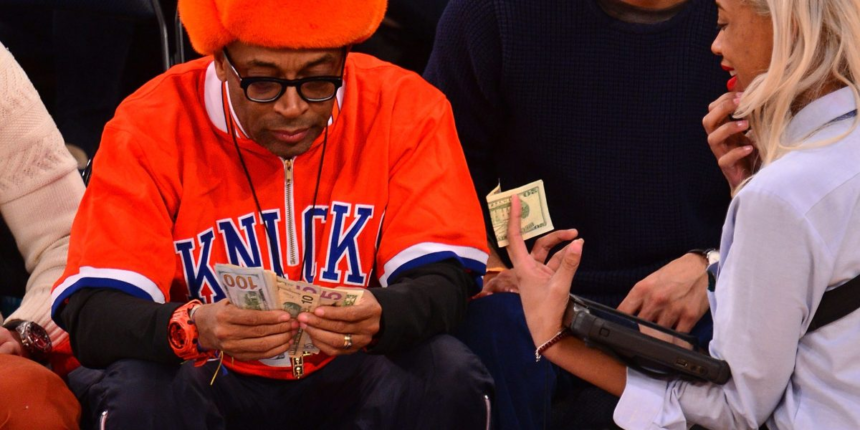
A small bar on Manhattan’s Upper East Side is turning the NBA Finals into a masterclass in risk management—and a preview of what Wall Street hedging might look like for Main Street businesses.
It was a lesson learned from a costly miscalculation. During the Eastern Conference Finals, the bar offered customers 1% off their tabs for every point the Knicks won by. “They won by a whopping 37%,” he said in the video. “Last time, we took a $4,000 hit.”
This time, Freedman has a plan.
“We’re hedging our risk on Kalshi,” he said, walking through the mechanics: If the Knicks win, he covers everyone’s tab but gets paid out by Kalshi—”that is a successful hedge.” If the Knicks lose, he’s out the $5,000 premium, but makes it back and then some from a packed house of paying customers.
With the Knicks given only a 37% chance of winning the series opener, a $5,000 trade on Kalshi would net $8,514 in profit—$13,514 total—enough to cover the tabs of everyone at the bar.
Kalshi itself approached Freedman with the idea. Jack Such, a representative for Kalshi, told Fortune the company had spotted a story about the 1% promotion and reached out to Freedman.
“You just ate $4,000 for no reason when you really could have used Kalshi to hedge against that risk,” he said the company told Freedman, who agreed to hedge his bet.
The Jeffrey appears to be the first and only small business to have hedged with Kalshi, though the company says it is in active conversations with others.
“The small business thing, we just thought this was kind of a good creative idea, really just sort of sprung out of” Freedman’s work at the bar, Such said. He added the use cases extend well beyond sports bars riding championship fever.
Retailers and restaurants that depend on foot traffic can hedge against rain and snowfall using weather contracts. Small importers rattled by two years of tariff volatility can take positions against U.S. trade policy on political contracts. A bar in a heavily Norwegian neighborhood could, in theory, hedge against Norway getting knocked out of the World Cup early—and the emptier nights that would follow.
“It could be any number of things,” Such said.
The pitch is also landing with bigger players. Crypto firm Galaxy Digital, pending a crypto market-structure bill passing Congress, said it made a $10 million wager on Kalshi. According to Such, that hedge was placed against the GENIUS Act failing—because Galaxy has significant financial exposure if it passes.
Knicks fans drinking at The Jeffrey might get a game-day bonus; Freedman likely gets more customers through the door and gets to potentially offset the cost of doing so; and Kalshi, which already saw $11.5 billion of sports market volumes in April, cements itself as a hub for monetarily expressing views on the big game. For a small business that ate $4,000 in free drinks less than two weeks ago, that kind of certainty has obvious appeal.
The appetite for anything Knicks-adjacent right now borders on irrational. The cheapest seats at Madison Square Garden for Finals home games are selling for nearly $4,000 on secondary markets—about $100 more than the combined get-in price for every remaining home game this season for the Mets and Yankees, plus every home game for the Giants.
About 20% of Game 1 purchases in San Antonio came from New York billing zip codes, according to TickPick—meaning fans are flying to Texas just to make the math work. For those staying put, even the alternatives got out of hand: the Knicks hosted a watch party inside Madison Square Garden for Game 1, with tickets priced at a flat $10—but the event sold out within minutes, and resellers quickly listed those same $10 passes for $40 and up. It’s even worse than you think: the proceeds go directly towards the Garden of Dreams Foundation, which has so far raised $360,000 this post season alone.
The stakes extend well beyond any single bar tab. New York City Mayor Zohran Mamdani and the New York City Economic Development Corporation announced this week that the Knicks’ 2026 postseason run has already generated an estimated $202 million in economic activity from home games alone—with the potential to hit $465 million if all possible Finals home games are played. Each additional home game, the city projects, generates roughly $90 million in economic activity.