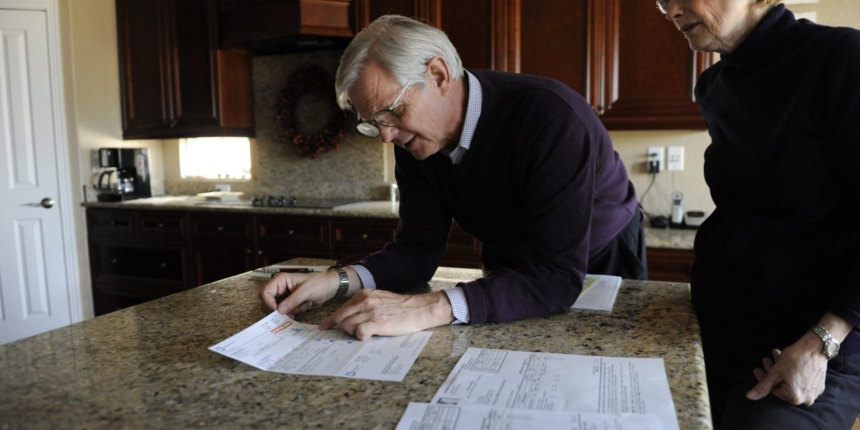
They cut the dining out first. Then they stopped putting money away. Then came the retirement account—the one thing financial advisors tell you never to touch—drawn down not for an emergency exactly, but for the slow-motion emergency of a life where the math stopped working and never started again. For many of Americans, simply existing has been the most expensive line item they’ve had, and they have pessimistic views of it ever improving.
The Roosevelt Institute is interested in what this means for the political future of the country, but this story is at root an economic one—and it has been building for a very long time.
Start with who they are not: they’re not primarily rural; not overwhelmingly conservative; not the caricature of the forgotten white working-class voter that pundits have been recycling since 2016.
Their financial lives aren’t dramatically different from the working-class majority. They’re just a few degrees worse, sustained long enough to harden into a worldview.
And this is not a MAGA story: 43% of the disillusioned identify as Democrats, 29% as independents and just 25% Republican. They are nearly a third of the electorate and they over-index as working and lower class. They are the 20th-century backbone of the Democratic Party, in other words, the type of voter that formed the “blue wall” in Michigan, Wisconsin and Pennsylvania that broke for Trump in 2016, and they remain hopeless about what the 21st century economy has to offer.
“The disillusionment is not a full walking away. It means people have expectations, and those expectations haven’t been met in the past, but we have an opportunity to meet them in the future.”
What followed were decades of growth that looked fine in the aggregate and felt hollow in practice—punctuated by brief spurts of genuine buoyancy that raised expectations before collapsing them. Think the dot-com boom, or the pre-financial-crisis expansion. And most recently, the strange, compressed labor market of 2021 and 2022, when COVID reshuffling briefly gave workers leverage they hadn’t felt in a generation.
“The closest thing we’ve had to it was actually immediately post-COVID,” Levinson said. “And that lasted for about a year. And now we’re back to, well, if you’re good, maybe we’ll give you a little wage increase next year. That’s about it.”
Levinson, who declined to talk about his personal politics because he said they are just not relevant for this conversation the way economic data is, acknowledged that people didn’t like his prescient 2016 book, which warned that populist demagogues would continue to be elected amid widespread economic malaise. “I think the part of the thesis that really bothered people of all political persuasions,” he said, “is that there’s not some lever the government can pull to fix all this.”
Wilkins agreed, saying that for a brief moment during COVID, Americans once again were able to achieve the prosperity realized during the post-WWII boom. (She noted that government-issued stimulus checks and a proactive health care system were a big part of the picture.)
“We did have this moment where we brought part of it back, and then we disappeared it again,” she said, adding that its disappearance is surely “giving people overall a sense of insecurity and uncertainty.”
These are not the results of a government that has been neutral. They are the results of a government that has, in the lived experience of a third of its voters, been actively failing them.
Here is where the story turns, and where it becomes relevant to anyone trying to understand what comes next, in business or in politics.
Levinson’s structural lens complicates this in an important way. His argument isn’t that policy is irrelevant—it’s that the forces suppressing productivity and living standards for most workers run deeper than any single agenda can fully address.
Levinson said left, right and center all have different “pet theories” about how to grow the economy again: “maybe you’ve got to control the money supply better, maybe you’ve got to pump more money into ailing industries, maybe you’ve got to raise tariffs, maybe you’ve got to give free child care … everybody’s got their solution to the problem, but people are very reluctant to accept the idea that there’s really serious limitations on what government can do about productivity in a deliberate sense.”
He concluded: “There just are no buttons to push, and people wish there were.”
The disillusioned are not going away. Their financial distress is structural, not cyclical. The brief post-COVID window that offered relief has closed. Productivity growth remains elusive. The housing market is frozen. The retirement math doesn’t work. And neither party has demonstrated, to their satisfaction, that it has a credible answer.
“Most families aren’t falling behind because they’re doing something wrong,” the Good Life Agenda framing reads. “They’re falling behind because the system is tilted against them.”
Wilkins said the government should take this into consideration when making new policy and looking to solve for the costs truly felt at the dinner table. “I see that as the right kind of challenge and opportunity for policymakers,” she said. “I think that’s evidence that the ‘affordability crisis’ runs a lot deeper than my weekly grocery bill. It is a deep sense of anxiety and insecurity about the future that we have an obligation to respond to.”