The workforce pyramid will begin to flatten, Kumar added, as there remains a need for both entry-level workers—as well as leaders to guide directions (he called the chief operations officer the most important role in any company). But in the middle, he said, is where AI will take charge.
“AIs will be in the middle of a flow. You want to have a ton of jobs in the front, you will have a ton of jobs in the back,” he said. “These are going to be validation and verification jobs, and those are going to be authentication jobs. Now, when you have a flat-earth pyramid, the biggest challenge is the middle layers are going to be leaner.”
“For the last two years, how you consumed tokens, how much tokens you consumed was a vanity metric,” he said. “…I don’t think you should equate this to the number of paid hours. I don’t think you should equate this to productivity.”
Instead, Kumar argued that knowing how and when to deploy tokenization strategically will become a discipline in its own right — one that individual teams will need to develop and refine based on their specific workflows and business goals.
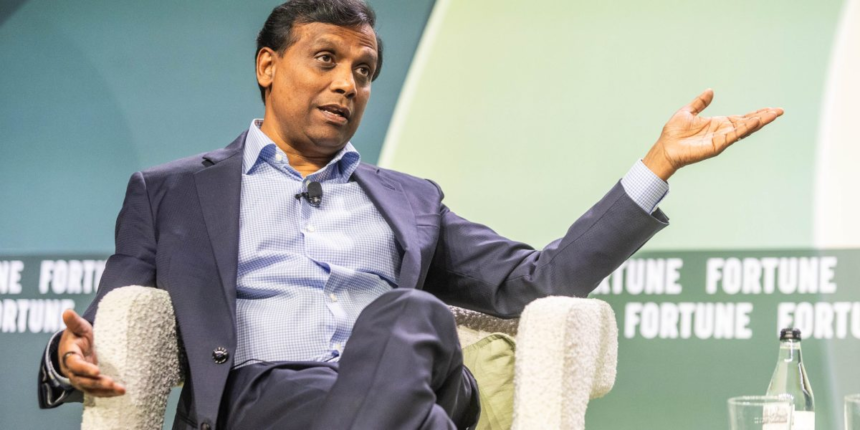
“It has to be grounded in the company’s hustle,” he said in the Fortune conversation titled “Great Restructuring: Rethinking Talent Strategy in the Age of AI.”
The broader shift, in Kumar’s view, is away from measuring inputs entirely: “We have to go from delivering projects, delivering billable hours, owning outcomes, and finally we have to underwrite those outcomes and be paid for those outcomes. I think that is the future. I believe we are going to reforge, and whoever reforges this future is going to be a winner on the other side.”