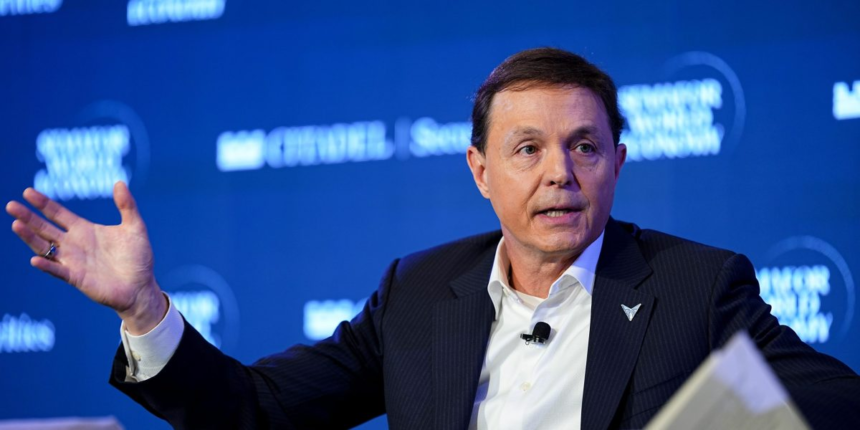
When you’re worth as much as Taylor, there’s only so much you can spend in one lifetime. Eventually, the conversation turns to what happens to the rest.
“At some point, once you have a couple hundred million dollars, you can’t really spend what you have,” Taylor explains. “So it then becomes, how much do you want to give to your kids?”
His answer: enough for a safety net, but not enough to remove the need to build something of their own.
So far, it seems to be working. His children are now old enough to access those resources, but he says they haven’t touched them. “They want to do things on their own,” Taylor adds. “Which is exactly what you want. That’s what you hope for.”
And everything above that eight-figure cap—potentially hundreds of millions, if not more—is going to philanthropic causes he cares about, including Space for Humanity, his nonprofit that sends people to space.
The number of billionaires on the planet keeps growing. And Taylor has watched up close (and unimpressed) how his peers approach the question of what to do with money they’ll never spend.
“I’ve been in rooms where people are obsessing about deductions and trusts, and how do I get more to my kids,” Taylor says. “It just doesn’t resonate with me.”
“I don’t obsess over those kinds of deductions,” he adds. “If you’ve been very fortunate, you should pay your taxes, and you should contribute to society… To me, it’s more like: what are the unmet needs in society, and how do we help?”
Admittedly, if he had “an extra dollar”, he says, he’d rather give it to charity than hand it to the government, because he has more confidence it will land where it’s needed. But his philosophy on giving is clear: He’d rather see it help people today than hoard as much wealth as possible for future great-great-great-grandchildren that he’ll never even meet.
“For it to go into some trust that’s going to go to my fifth generation in the year 2200, I don’t think that’s in the spirit of making the world a better place.”
And he’s far from the only one who feels that way.
Taylor is part of a growing class of ultra-wealthy questioning whether passing down enormous fortunes is really good parenting.
And it’s not the case that the generation simple hasn’t gotten around to estate planning yet. Actually, 60% already have a will in place—but their children and grandchildren are more likely to find funeral instructions in it than cash or the deed to their family home. That’s because the majority are explicitly planning not to leave anything behind, with only 11% saying it’s their top financial goal.