When John Kurz left Alaska’s North Slope in 2009, he was staring at a grim future for what had once been the country’s premiere oil field.
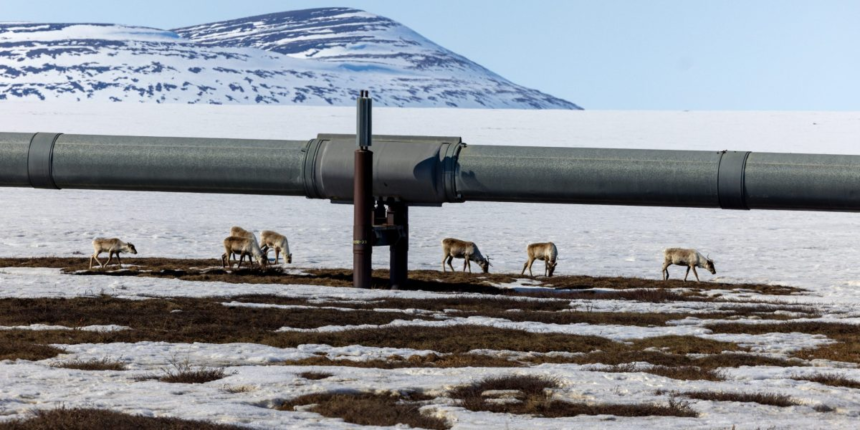
Engineers even worried that slow-moving crude would congeal inside the pipeline, creating waxy buildup that could turn TAPS into the world’s biggest tube of ChapStick.
Kurz fled Alaska for more promising opportunities overseas, but he was beckoned back in 2023 to run Alyeska Pipeline Service Co., overseeing the same pipeline whose future had looked so bleak 14 years before.
He’s not the only one. Alaska has seen a resurgence of oil industry interest — and investment — driven by discoveries suggesting the state’s crude potential is far greater than previously expected and helped by more accommodating policies from the Trump administration.
The efforts risk overturning decades of opposition from environmentalists who’ve fought to prevent industrial oil development in the territory, which spans roughly 23 million acres in northwest Alaska. They’ve argued that Arctic oil development prolongs the world’s reliance on planet-warming fossil fuels and threatens untouched stretches of land that are rich in wildlife.
The region is a globally significant ecosystem that supports migratory birds from every continent and plays a critical role in the planet’s environmental balance, making preservation essential even as oil and gas drilling expands, he said.
New geological research and test wells bored into the tundra are feeding a swell of enthusiasm that stretches from processing plants in snow-covered Prudhoe Bay to oak-paneled boardrooms in Houston. Industry executives say growing confidence in the region also reflects that the regulatory changes are expected to endure beyond Trump’s presidency.
“What surprised us in the lease sale wasn’t only the dollar levels, but the new or returning entrants, like Shell and Exxon,” said Bruce Dingeman, an executive vice president at Santos who leads the Australian company’s Alaska operations. “That was a vote of confidence for the geology and the play, but it was also a vote of confidence that the regulatory reform is going to allow for responsible development to continue.”
The federally managed NPRA was originally set aside a century ago to support the Navy’s energy needs. Though the region remains relatively underexplored, recent finds have benefited from companies’ access to oil infrastructure and expertise built over decades at nearby Prudhoe Bay, the Alaska oil field that began pumping crude into TAPS in 1977.
Earlier this month, Santos and Repsol began producing the first commercial oil barrels from that discovery now known as Pikka. It’s expected to pump about 80,000 barrels a day.
Standing beside a towering rig boring a new well at Pikka earlier this month, Hufford, a 68-year-old geologist, got wistful. “The future here is fantastic,” he said. “I wish I was 30 again.”
Newly drilled exploration wells suggest the project can “grow and be a little bigger” to sustain production for longer, even as ConocoPhillips invests about $1 billion annually to extend output from its existing Alaska assets, said Lance, the company’s CEO.
Armstrong said the same underground geological features that make Willow, Pikka and Quokka successes appear to be replicated moving west across the reserve.
“There are, conservatively, at least a dozen undrilled big anomalies in the NPRA,” Armstrong told Bloomberg. “The Nanushuk play has big-time running room.”
Developing oil in Alaska’s Arctic is a forbidding challenge, requiring complex logistics and specialized equipment. Many critical operations are limited to short seasonal windows when crews can work from man-made ice roads and pads, even as temperatures fall to -30F.
Still, the payoff can be huge. Unlike many oil wells in the continental US, which can be drilled quickly but also decline rapidly, Alaska’s conventional crude reservoirs tend to be larger and longer-lived.
The prospect of more drilling divides some Alaskans. Some see new oil activity as critical to generating revenue that can pave roads and improve living standards in remote communities. Others warn it creates an oil dependency that leaves villages reliant on resource income while discouraging alternative paths to prosperity.
Some indigenous Alaskans who rely on local wildlife for subsistence are also wary of what increased exploration could mean for communities deeply connected to the land and sea, including the caribou that migrate across the tundra and the whales that pass along the Arctic coast.
Even so, Republicans representing Alaska on Capitol Hill have advanced a measure nullifying a restrictive 2022 management plan for the reserve that environmentalists had championed as protecting caribou, birds and other wildlife. Lawmakers have used a process designed to tie the hands of future administrations seeking to bar development in the NPRA.
The move is boosting industry confidence in the durability of policies supporting development there, said Senator Dan Sullivan, an Alaska Republican. “All of a sudden you have serious stability legally,” he said in an interview.
It’s all a little surreal to Kurz, the Alyeska CEO who has lived through the wild swings of Alaska’s oil industry. In 2008, he recalls having his first conversation about how declining production would make it increasingly difficult to keep TAPS operating.
“I didn’t think I’d ever come back and work here,” Kurz said. But now, “the production trend up the North Slope and in TAPS is going up.”