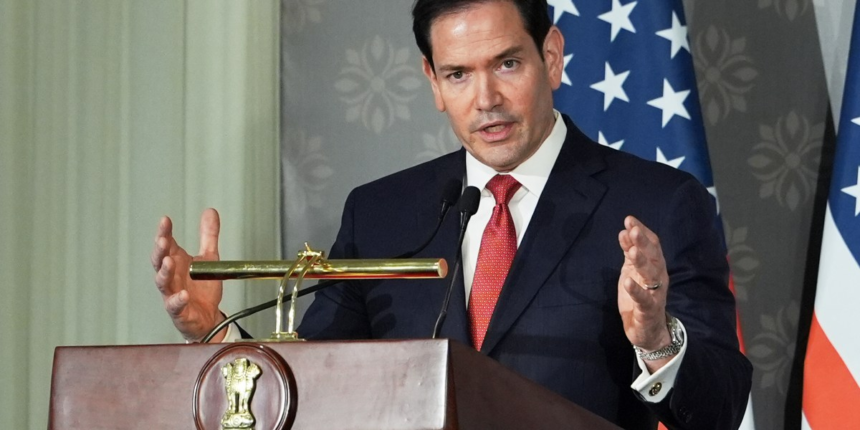
Iran’s embassy in India responded to Rubio on social media, saying Tehran has an “inalienable” right to nuclear technology. Iran has always insisted its program is peaceful.
The U.S. in recent weeks had threatened to resume its bombing campaign, which would have likely prolonged the closure and led to Iranian retaliation on Israel and U.S.-allied energy producers in the Gulf.
On Saturday, Trump said a deal had been “largely negotiated,” after calls with Israel and other regional allies. “Final aspects and details of the Deal are currently being discussed, and will be announced shortly,” Trump said on social media.
Under the potential deal, Tehran would agree to give up its stockpile of highly enriched uranium, according to the two regional officials, who spoke on condition of anonymity to discuss the sensitive negotiations.
One official, with direct knowledge of the negotiations, said how Iran would give up its highly enriched uranium would be subject to further talks over the course of a 60-day period. Some would likely be diluted, while the rest would be transferred to a third country, potentially Russia, the official said.
Iran has 440.9 kilograms (972 pounds) of uranium that is enriched up to 60% purity, a short, technical step from weapons-grade levels of 90%, according to the International Atomic Energy Agency.
Iran said the peaceful use of nuclear science and technology is “the legitimate and inalienable right of its people,” saying it “will never relinquish this lawful and internationally recognized right,” according to a social media post by its embassy in India, where Rubio spoke.
On Saturday, Iranian Foreign Ministry spokesman Esmail Baghaei told Iran’s state-run news agency that there are “narrowing differences” between the Iranian and U.S. positions, but that Iran is cautious after being attacked twice in the past year during nuclear negotiations.
Pakistani army chief Asim Munir, a key mediator, left Tehran late Saturday after several days of talks with Iranian officials.
Under the emerging agreement, the Strait of Hormuz would gradually reopen in parallel with the U.S. ending its blockade of Iran’s ports, the officials said.
The U.S. would also allow Iran to sell its oil through sanctions waivers, said the second official, who has been briefed on the negotiations. Sanctions relief and the release of Iran’s frozen funds would also be negotiated during the 60-day time frame, the official said.
Both officials said the draft deal includes an end of the war between Israel and the Iran-backed Hezbollah militant group in Lebanon, as well as a commitment of not interfering in the domestic affairs of countries in the region.
Several countries, including the European Union and the United Kingdom, welcomed progress on a possible deal with Iran.
Israeli officials are concerned that Hezbollah remains a serious threat to Israel and that Lebanon is ill-equipped to disarm it.
The official said Trump made it clear to Netanyahu that he would not sign any final agreement without the conditions that Iran dismantle its entire nuclear program and give up all its enriched uranium.
Israel’s Science Minister Gila Gamliel, a member of Netanyahu’s Likud party and part of his national security cabinet, told Israel’s Army Radio on Sunday that Israel is taking a “wait-and-see” approach.