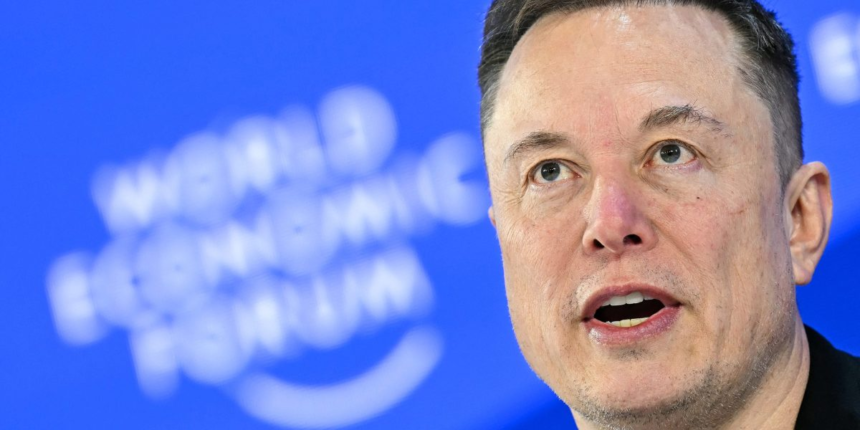
The IPO prospectus provided the first official look at the financials behind the much-hyped rocket maker that’s been around since 2002, as well as at several other businesses that Musk has folded into the company including AI, social media, and the Starlink satellite communications business. The Starlink business appears to be SpaceX’s primary financial engine, accounting for more than two-thirds of the revenue and earning $1.2 billion in profit in the most recent quarter. The space and AI divisions both lost money during the quarter.
Taken together, the prospectus reveals that Musk’s Space Exploration Technologies Corp is growing at a steady clip—full year revenue of $18.7 billion in 2025 increased roughly 33% from $14.1 billion in 2024—but that its losses are also accelerating as it pursues a mission to “build the systems and technologies necessary to make life multiplanetary, to understand the true nature of the universe, and to extend the light of consciousness to the stars.”
As of March 31, SpaceX has racked up an “accumulated deficit” of $41.3 billion, with a $4.27 billion net loss in Q1 of this year, compared to $528 million in the year ago quarter.
While much of SpaceX’s day-to-day operations are said to be run by President and Chief Operating Officer Gwynne Shotwell, the prospectus puts the spotlight squarely on Musk, the world’s richest—and often most controversial—person.
“You want to wake up in the morning and think the future is going to be great—and that’s what being a space-faring civilization is all about,” Musk, 54, says in a quote at the beginning of the IPO prospectus.
Over the past decade, SpaceX has become a vital part of the U.S. space program and the commercial space business, with its rockets transporting astronauts and supplies to the International Space Station and blasting satellites into orbit for various companies. SpaceX is also at the forefront of developing re-usable rockets like the so-called Starship, which it hopes will one day transport humans to Mars.
As SpaceX embarks on its pre-IPO road show to court investors, Musk will need to make the case for the variety of businesses he has folded into SpaceX in recent years through a Russian doll-like series of mergers and acquisitions. The Twitter social media platform that Musk acquired in 2022 and rebranded as X, for example, was later folded into xAI, Musk’s artificial intelligence company, which was acquired by SpaceX in February. That means SpaceX now owns a social media platform as well as Grok, a “truth-seeking” chatbot the prospectus claims will “enable humanity to understand the universe.”
SpaceX has also entered into a deal with Cursor, an AI code writing program, that gives it the option to acquired the company for $60 billion or pay a $10 billion termination fee.