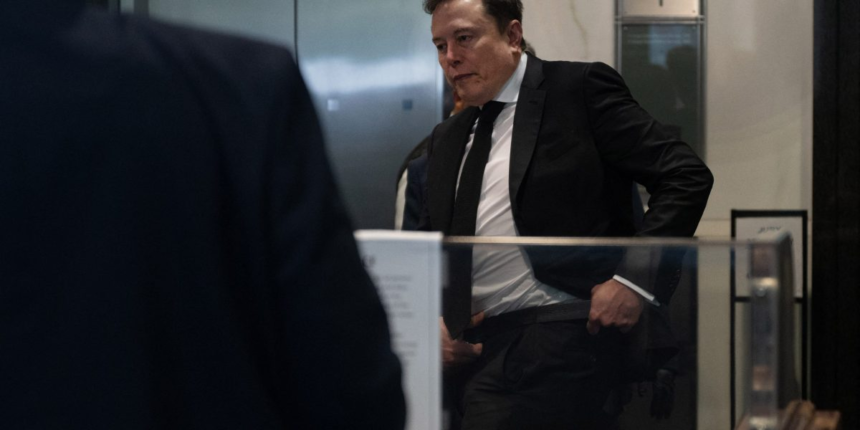
OpenAI’s lawyers tell a slightly different story. Lead counsel William Savitt told jurors in his opening statement that Musk had simply lost a power struggle and was now nursing his “sour grapes,” particularly because Musk now runs his own for-profit AI lab, xAI. “My clients had the nerve to go on and succeed without him,” Savitt said. “Mr. Musk did not like that.”
Musk’s version of AI history
He testified that those concerns about AI crystallized during a 2015 meeting with Page, when the Google co-founder predicted AI would bring utopia. Musk worried Page wasn’t taking the risks seriously, to which, according to Musk, Page accused him of being a “specieist”—someone who favors humans over the digital life-forms of the future.
“The reason OpenAI exists is because Larry Page called me a ‘specieist,’” Musk told the court.
He went on to lay out a relatively binary vision of AI’s future borrowed from pop culture. “We don’t want to have a ‘Terminator’ outcome,” he said. “We want to be in a Gene Roddenberry outcome, like ‘Star Trek.’ Not so much a James Cameron movie like ‘Terminator.’”
Yet, even as he positions himself in court as the last line of defense for charitable giving in America, his foundation, the Musk Foundation, has failed to give away the legally required 5% of its assets for four years running, according to public filings. The jury is asked to set aside their impressions of Musk to adjudicate the case.
Musk returns to the stand on Wednesday morning, where he will be cross-examined by OpenAI’s lawyers.