The hyperscalers building the infrastructure of the AI economy have a $650 billion problem hiding in plain sight — and it doesn’t involve tariffs, talent, or chip export bans. It involves helium.
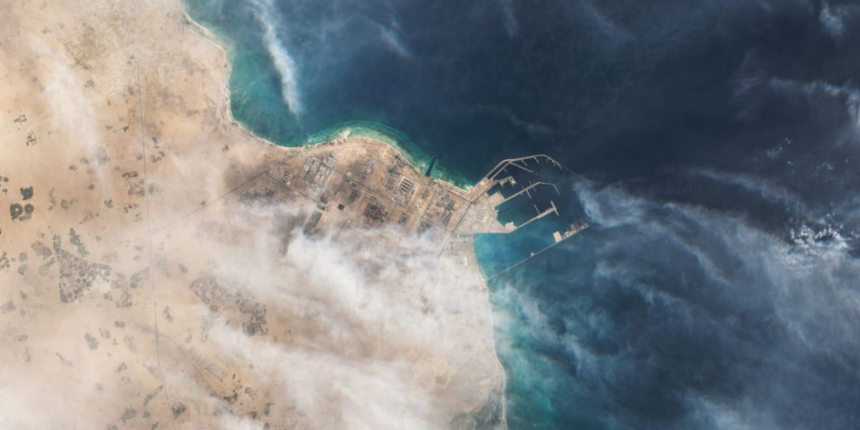
Qatar accounts for roughly 30% of global high-purity helium supply, collecting it as a byproduct of natural gas production. When attacks struck the country’s Ras Laffan industrial complex — one of the world’s largest petrochemical hubs — helium supplier Air Liquide’s AirGas subsidiary declared force majeure, signaling it could no longer fulfill contracted supply volumes. The Qatar complex ceased operations on March 2.
One potential relief valve: Russia’s Amur helium complex, which has been operating below capacity under sanctions. A lifting of sanctions could “significantly increase supply,” Moody’s Ratings notes, though it remains unclear over what timeframe. The lifting of sanctions, of course, is a significant political issue. Johns Hopkins professor Steve Hanke recently told Fortune that the Iran War is “good for Russia” for related reasons: everything Russia sells, mainly oil but also resources such as helium, is now being sold in higher volumes at much higher prices.
But even Russia’s return online would not be a silver bullet, according to Moody’s Pan. “Helium doesn’t get much attention in the AI supply chain, but it should,” he told Fortune. Not only is it essential for cooling wafers during chip etching, he argued, “there is no viable substitute at scale.”
For an industry betting hundreds of billions on uninterrupted compute growth, the helium crunch is a reminder that the AI supply chain runs through some of the world’s most volatile geography — and that the atoms holding it together are millions of years in the making.
For this story, Fortune journalists used generative AI as a research tool. An editor verified the accuracy of the information before publishing.