Blue Origin’s flagship New Glenn rocket launched to space on its third flight, reusing a booster for the first time but failing to correctly place the satellite it was carrying into its intended orbit.
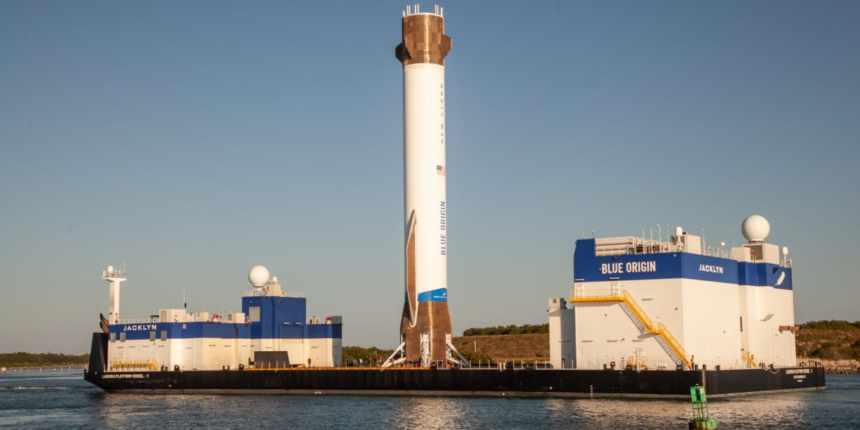
The rocket took off from the launchpad at Cape Canaveral, Florida at approximately 7:25 a.m. local time, and its reusable first stage returned to Earth at 7:35 am, touching down on a barge in the Atlantic Ocean.
Key to Blue Origin’s ambitious plans for space exploration, New Glenn is years behind schedule and has faced longer-than-expected waiting periods between its flights. The unexpected issue today could mark a setback for the company’s ambitious plans for space exploration and its reputation as an alternative launch provider to SpaceX’s Falcon 9.
Blue Origin Chief Executive Officer Dave Limp would like to launch eight to 12 flights this year, he said in a Bloomberg Television interview ahead of the launch.
“We have plenty of hardware to do that,” he said, noting the unprecedented demand for launches.
“And by the way I think demand is going up,” he added, citing the growing number of satellite-based internet services and connectivity.
Blue Origin expected six to eight New Glenn launches last year, Limp said around the time of the rocket’s debut in January 2025, but ended the year with only two.
Blue Origin’s Mark 1 lunar lander has “a very good chance” of landing on the moon later this year, Limp said.