Ceasefire talks between the U.S. and Iran have begun in Pakistan, but a potential military clash between the two countries is already looming.
“Today, we began the process of establishing a new passage and we will share this safe pathway with the maritime industry soon to encourage the free flow of commerce,” said Adm. Brad Cooper, commander of Central Command.
Trump halted his war against Iran for two weeks while talks are underway. But the ceasefire remains fragile as hostilities continued, and Iran maintains a tight grip on the strait.
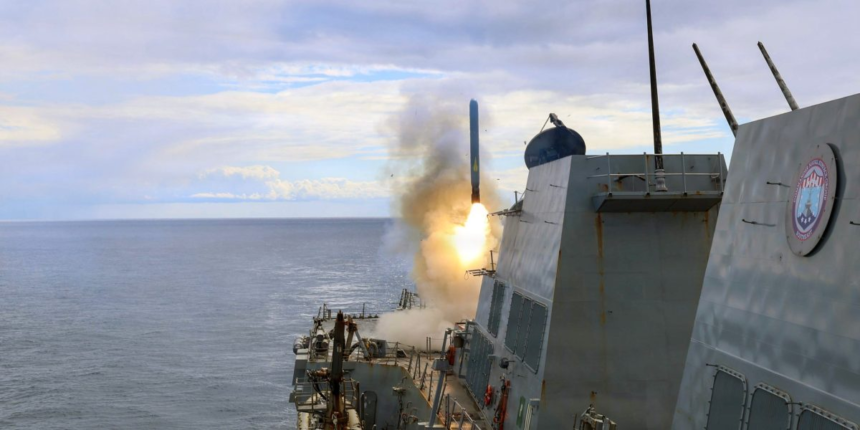
At the same time, the U.S. military continues to send more combat power to the region. A third aircraft carrier as well as thousands of Marines and paratroopers are expected to arrive later this month. More long-large cruise missiles are also flowing to the Middle East.
He compared weakening Iran’s threats to a game of whack-a-mole, listing anti-ship missile launchers, small fast-attack boats, drones, submarines, and long-range artillery.
McNally, who previously served as White House energy advisor to President George W. Bush, also pointed out that the U.S. has reduced Iran’s stockpile of underwater mines that can be used to close the strait.
“It may not be widely reported, but I believe the U.S. military in the last week or so has been focusing on whacking those moles, degrading Iran’s ability,” he added. “You may not perfectly get rid of it, but degrading Iran’s ability to interdict shipping down to a manageable level—and that’s when insurance can come into play and escorts, and folks can start to move through.”
For now, Iran’s missiles and drones are enough to scare ships away, giving Tehran effect control. While a trickle of ships have been allowed to go through, it’s been very selective and a toll of about $2 million is required.
Iran is seeking to formalize this “toll booth” in ceasefire talks, and Trump has even mused that the U.S. could enter into a joint venture with the Islamic republic to extract the transit fees.
But the Gulf states that export their oil and gas through Hormuz have signaled they will not tolerate Iranian control of the strait. Meanwhile, Wall Street has warned it would also threaten U.S. dollar dominance in global trade.
“It would be a breakdown in global order and trade and stability,” he said. “It’s hard for me to imagine that the United States would end this conflict leaving Iran strengthened and an ability to sort of extort tolls, not only tolls, but other concessions: diplomatic concessions, foreign policy concessions, military concessions.”