Gen Z loves to love what millennials hate.
Now, they’re rejecting the millennial gray aesthetic and reinvigorating a classic early 2000s vibe: The Tuscan Mom.
The resurgence has recently exploded across TikTok, racking up millions of views as the young professional generation romanticizes oversized, ornately decorated homes that epitomized early-2000s American aspirational living in suburban McMansions. And they’re dressing like Tuscan moms, too.
Spending the day as a 2000s Tuscan mom 👜✨🤎🥰🫒 best use of my free will today lol #tuscan#2000sthrowback#aesthetic #tuscanmom#girlythings
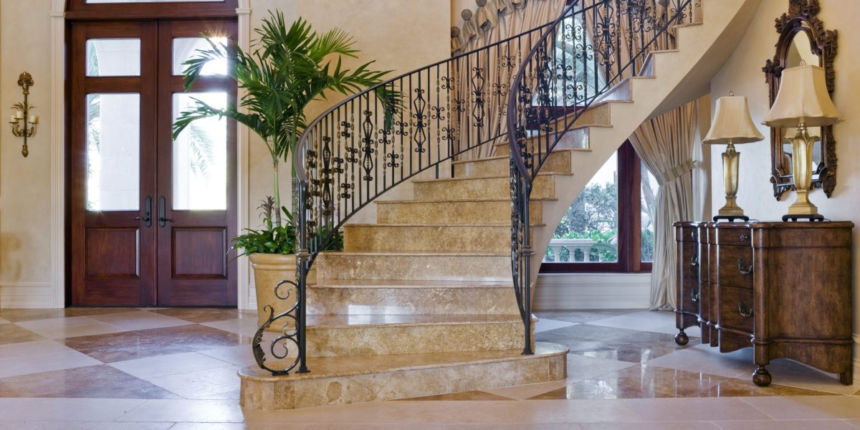
Think soaring ceilings with wood beams, terracotta walls in deep ochre and sienna, heavy wrought-iron light fixtures, and layered textures. And in terms of fashion, flare jeans, fitted knit tops, silk blouses, oversized sunglasses, and gold jewelry all reign supreme for Tuscan moms.
To be a tuscan mom in a tuscan house #2000s #tuscan #tuscanmom #2000sthrowback #girlblogger
It’s not an aesthetic they would’ve likely learned from their own mothers. Their daughters would be millennials who went on to reject maximalism, bold colors, and statements, opting for cooler, hushed tones and minimalist fashion and design.
So Gen Z has largely inherited the Tuscan mom look from screens rather than from lived experience, leaning into the vibes of Gaby Solis’ home in the early-2000s mystery-comedy-drama Desperate Housewives or the Cohen house on The O.C.
But Gen Z’s Tuscan mom era isn’t an exact copy-paste of the early 2000s. They’ve repackaged it as something fresh, experts say.
“The TikTok version is more of an imagined lifestyle that romanticizes that era’s glamour and textural richness but filtered through Gen Z’s lens,” Simpson said. “It’s nostalgic, playful, and aspirational rather than a direct attempt to replicate old-school Tuscan design.”
The original early-2000s Tuscan style was, by most accounts, unapologetically maximalist. Homes had arched door frames, terracotta floors, faux-finish walls, and dramatic Mediterranean motifs (everything felt Italian—at least what Americans think Italy looks and feels like).
The current iteration of the Tuscan mom aesthetic keeps the warmth, but drops some of the performance, he said.
“Status signal is not of interest to Gen Z,” Ratmoko said. “They desire the texture, the down-to-earth palette, and the sense of a room that was not designed to be photographed on a listing.”
As Simpson put it, the current iteration is less a recreation of the 2000s and more a reinterpretation, pulling the spirit of warmth and texture from that era and remixing it for today.
“TikTok gives it a catchy name and visuals that go viral, but the appeal taps into something real,” she added. “People are craving comfort, texture, and spaces that feel human and soulful after years of minimalist, grayscale interiors.”
The Tuscan mom trend could be deeply resonant with Gen Z because they’re reacting against years of seeing millennials decorate their homes minimally, with little color or warmth.
When millennials were old enough to have their own spaces, they wanted to take a break from the heavy ornamentation of their childhoods. That started the so-called “millennial gray” era of cool, neutral, and carefully controlled interior design.
Simpson also said it’s because Gen Z doesn’t view the aesthetic of their predecessors to be particularly exciting.
“Gen Z, having grown up with that gray-washed world, sees it now as bland and inhospitable,” she said.
In other words, the fashion and interior design pendulum has viciously swung back about two decades.
While some trends that cross your TikTok feed are fleeting, experts say the Tuscan mom era is happening in real life, and it’s one that could stick.
“Warm interiors, stone countertops, arched details, and aged wood finishes started showing up in purchasing data well before the TikTok conversation peaked,” Ratmoko says. “The content didn’t create the desire. It called a name to what people were already experiencing.”
“Designers and homeowners are already talking about warmer palettes and more tactile materials in real projects,” she said. “Whether people literally recreate a McMansion interior or not, the feeling of that aesthetic—earthy tones, layered finishes, materials that age beautifully—absolutely can influence real purchasing and renovation decisions.”
There’s also a deeper cultural element at play, Ratmoko said, and one that goes beyond just a simple 20-year trend cycle.
“When individuals are overwhelmed by pace and confusion, they turn to spaces that seem stable and unchanging,” he says. “Stone, wood, warm plaster, and heavy curtains convey the message of stability that flat gray walls and minimalism do not. The Tuscan revival is not a nostalgia for the early 2000s. It is a reaction to the present moment.”