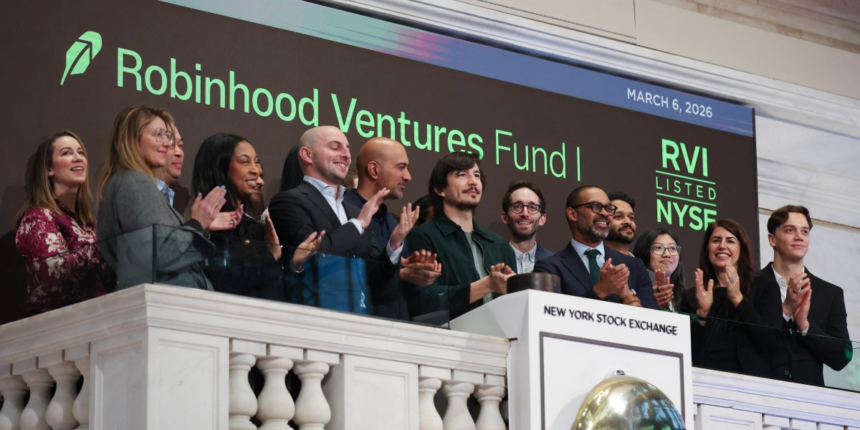
Is Robinhood’s attempt to let retail investors get a piece of private markets too little, too late?
Sarah Pinto, the head of Robinhood Ventures, told me that those worries are short-term at best. A veteran venture capitalist who spent almost eight years investing at Laurene Powell Jobs’ Emerson Collective, she believes that there will be “tons of opportunities” to notch returns in the years to come. (At Emerson Collective, she backed OpenAI, Anthropic, and Coinbase, among others.)
As the models powering the AI economy continue to improve, Pinto predicts that companies will build an ecosystem of applications that take advantage of OpenAI or Anthropic’s tech. “I actually think this wave of innovation will probably be bigger than any of the previous ones, and that we’re actually just at the beginning,” she said.
So far, Pinto has led Robinhood Ventures to take stakes in only a select group of late-stage companies. These include fintechs like Airwallex and Stripe and AI powerhouses like Databricks and Mercor. Robinhood either invests in primary rounds or buys shares on the secondary market with explicit permission from the startups, she said.
Pinto wasn’t at Robinhood when the online brokerage announced the initiative and isn’t involved with stock tokens now. Rather, she’s focused, like any venture investor, on persuading buzzy companies to let Robinhood join their cap table.
She argues that those who let Robinhood Ventures buy equity can have a broader set of investors profit from their startups’ growth—an attractive proposition for firms who want a more diverse set of stakeholders. And Pinto said Robinhood’s platform spotlights its portfolio through founder interviews and bios, among other methods.
While Robinhood Ventures aims to currently invest in late-stage startups, Pinto didn’t discount the possibility of making bets on younger firms: “We call this Robinhood Ventures I for a reason.”
See you tomorrow,