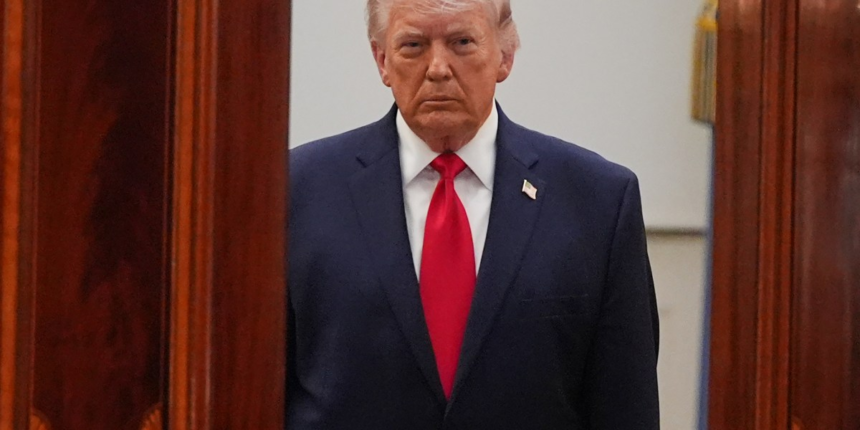
President Donald Trump’s response to this situation is to fix the fact that interest payments exceed military budgets by taking out more debt to boost the military budget, according to a top watchdog calculation.
On Monday, no less an authority than Federal Reserve Chair Jerome Powell chimed in with similar comments. In a moderated discussion before roughly 400 Harvard economics students, Powell said that while he doesn’t consider the nation’s $39 trillion debt load to be immediately dangerous, its trajectory demands urgent action.
“The level of the debt is not unsustainable,” Powell said, “but the path is not sustainable. It will not end well if we don’t do something fairly soon.”
Powell drew a sharp distinction between the stock of debt and its rate of growth.
The numbers behind Powell’s concern are stark. Net interest payments on the national debt are now projected to exceed $1 trillion in fiscal year 2026—nearly triple the $345 billion the government paid in 2020. In just the first three months of the current fiscal year, interest payments reached $270 billion, already surpassing the nation’s defense spending during the same period. The Congressional Budget Office projects debt held by the public will surge from 101% of GDP today to 120% of GDP by 2036, eclipsing the post–World War II record.
Powell put the ball in Congress’s hands, as to how to solve this issue.
“We don’t have to pay the debt down,” he said. “We just need to have primary balance and begin to have the economy actually growing more quickly than the debt.”
Whether Congress will heed the CRFB’s call to offset the defense buildup remains to be seen. But the fiscal arithmetic is unforgiving: Layering nearly $7 trillion in additional debt on top of a $39 trillion base, with interest rates higher than they were just a few years ago, narrows the margin for error considerably—and makes the path Powell warned about much steeper.