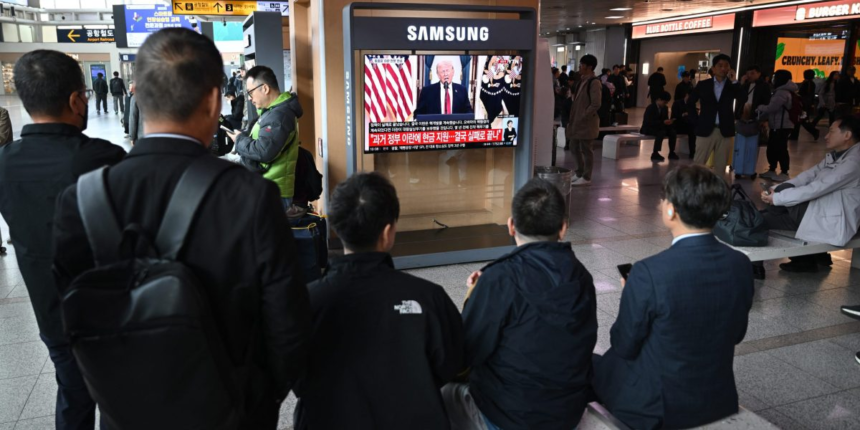
Asian investors reacted poorly to U.S. President Donald Trump’s nationwide address on Thursday. After more than a day of speculation as to what Trump might discuss, ranging from sending in ground forces to plans for a ceasefire, the president’s address instead signaled a continued conflict and energy disruptions.
West Texas Intermediate Crude surged past $106 per barrel; rising oil and gas prices will continue to put pressure on Asian economies that rely on imported energy.
South Korea’s KOSPI, which has swung wildly since the war began over a month ago, fell by almost 4.5%. Japan’s Nikkei 225 dropped by 2.4%, while Hong Kong’s Hang Seng Index fell by around 0.7%. Taiwan’s TAIEX fell by 1.8%. As of 4:30am Eastern, India’s NIFTY 50 is down by 0.67%.
Trump’s messaging on Iran has constantly shifted over the past few weeks, oscillating between calls for expanded and aggressive strikes on the Middle Eastern country, to suggestions that he might be comfortable with withdrawing from the conflict and leaving Iran to hold the Strait of Hormuz.
The strait is a critical waterway for much of the Middle East’s oil and gas, bound for markets in Asia and Europe. The Strait has been effectively closed since the war began.
The U.S. president has tried to lobby allies to do more to keep the Strait open, with little effect. While countries like Japan, Australia and the U.K. have criticized Iran’s decision to block the waterway, none have committed to using military force.
Trump’s patience may have run out. In his address, he called upon countries to show some “delayed courage” in taking the Strait for themselves, arguing that an “essentially decimated” Iran wouldn’t be able to provide much resistance.
“Countries of the world that do receive oil through the Hormuz Strait must take care of that passage,” the president argued. “We will be helpful, but they should take the lead in protecting the oil that they so desperately depend on.”
Iran, in the meantime, is quickly institutionalizing its control of the Strait, taking the power to decide what ships are allowed to transit the waterway—and how much they should pay for the privilege to do so.
“Australia is not an active participant in this war, but all Australians are paying higher prices because of it,” Albanese said.
“If we save every drop of fuel, avoid wasting even a single plastic bag…we can emerge from the tunnel of crisis safely and swiftly.”