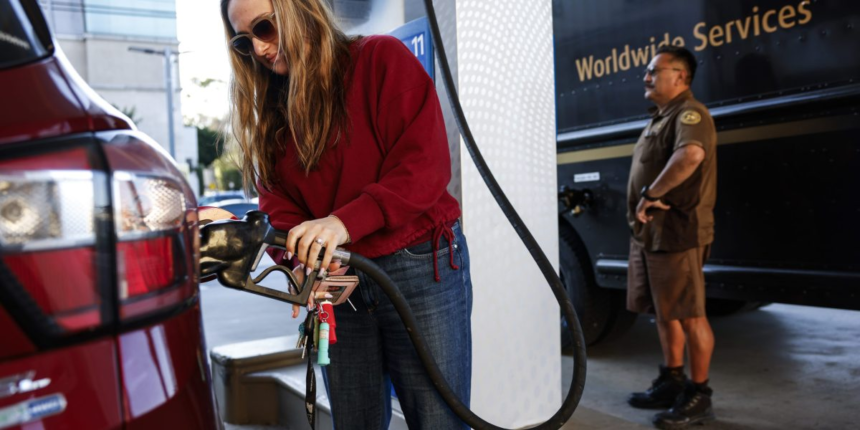
Bank of America’s spending data tells a rare good-news story about Gen Z — until it doesn’t. After years of being squeezed by surging rents and sluggish wage growth, the youngest adult generation had just begun to really get out there and spend their fun money. Then gas prices jumped 26% year-over-year, and BofA economists are now warning that the recovery could be snuffed out before it fully takes hold.
For the first time in years, Gen Z was winning. Rents had finally stopped devouring their paychecks, wages were rising faster than their housing costs, and a generation that had long trailed older Americans in spending growth was starting to actually open its wallet — on restaurants, new clothes, electronics, even travel. Then came the oil shock, brought on by President Donald Trump’s widely expected and yet also still surprising decision to go to war on Iran.
“Both Gen Z and Millennials may be even more prone to cutting back on ‘nice-to-have’ spending amid higher gasoline prices,” BofA Institute economists Joe Wadford and David Michael Tinsley wrote in the report.
The engine behind the surge? Rent relief. In Bank of America’s aggregated card and deposit data, median rent payment growth for Gen Z and Millennials slowed sharply in the 12 months through February 2026. And crucially, wages have been growing faster than rents for both generations — up roughly 9% year-over-year for Gen Z and 5% for Millennials. That gap between rent and wages is the financial breathing room younger Americans hadn’t had in years, and proprietary BofA card data shows they were spending it: on clothing, on dining out, and especially on electronics, which saw the sharpest discretionary jump of any category.
Now, rising gasoline prices threaten to claw back those gains. The average national gas price is up approximately 26% year-over-year as of March 23, driven by escalating conflict in Iran, according to American Automobile Association data cited in the report. And Gen Z, the analysis warns, is the generation most exposed.
Even before this spike, Gen Z’s gasoline spending as a share of total card spending was running higher than any other generation’s — and had stayed stubbornly elevated while older generations’ shares fell from pre-pandemic levels. BofA economists attribute this to a straightforward reality: Gen Z is just entering the workforce, commuting for the first time, and doing so on relatively modest incomes. The ratio of gas spending to discretionary spending is highest for Gen Z of any cohort. In plain terms, for every dollar a Gen Zer spends on things they want, a larger share of it now goes to the pump than for a Boomer or a Gen Xer.
The labor market adds another layer of risk. Young workers aged 22-27 — including recent college graduates — are already experiencing unemployment rates markedly above the national average, according to data from the Federal Reserve Bank of New York. Many work in retail and leisure, the very sectors most likely to feel the pinch from a pullback in discretionary consumer spending, which would, in turn, eliminate the jobs those same young people hold. It’s a feedback loop that could hit Gen Z from both ends of the ledger: higher costs at the pump and fewer hours at work.
The wild card, BofA says, is whether rent growth continues to cool. If it does, younger consumers may have enough cushion to absorb some of the pain from gas prices. If rents start climbing again alongside fuel costs, the brief, hard-won spending revival that defined the past several months could stall just as it was getting started.
For this story, Fortune journalists used generative AI as a research tool. An editor verified the accuracy of the information before publishing.