If Asian countries want a solution to their energy woes in the Middle East, perhaps they should look, well, to the east—across the Pacific to energy sources in North America, and Canada in particular.
There’s no technological fix for geography, as author Robert D. Kaplan argued in his 2012 book, The Revenge of Geography. The only solution is a different map—and for Asia’s energy buyers, that different map is on Canada’s Pacific coast.
Canadian crude from Alberta now moves west through the Trans Mountain Expansion (TMX) pipeline, which came online in May 2024 and has nearly tripled maximum capacity to 890,000 barrels per day. Since startup, shipments from the Westridge Marine Terminal near Vancouver have helped triple Canadian crude exports to non‑US destinations, with Asia—particularly China—emerging as a key buyer.
The Alberta‑to‑Asia route does not rely on Hormuz or Malacca, and it originates in a jurisdiction perceived as politically stable. Importantly, Canada is low-risk and—one hopes—unlikely to be beset by conflict any time soon.
Canadian LNG from Kitimat takes roughly 10 to 11 days, at a delivered cost of under $1/MMBtu versus $2/MMBtu or more via Panama, according to energy research firm RBN Energy. Canada’s route is shorter, cheaper and avoids congestion in the Canal.
In contrast, LNG Canada Phase 1 is operational, and ready to serve Asian buyers, today.
And they’d find a willing partner in Ottawa, which is actively encouraging Asian participation as part of a broader effort to diversify energy exports away from an over‑reliance on the U.S. market.
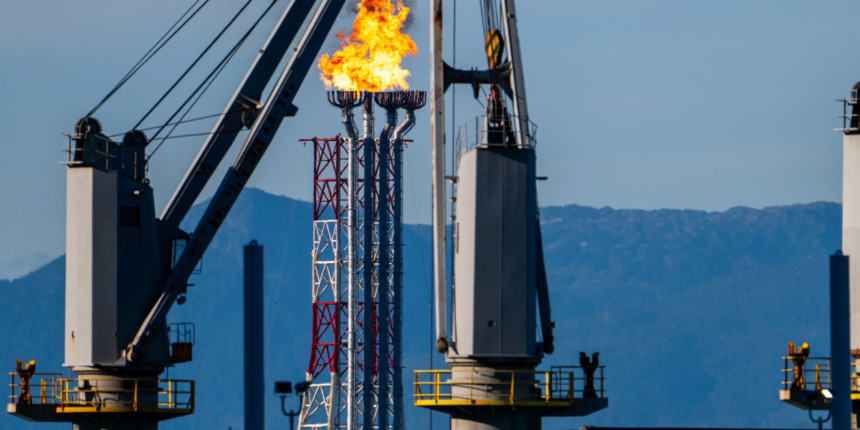
The tankers anchored outside Hormuz and the burning facilities at Ras Laffan are a live demonstration of what happens when energy security relies on a 33-kilometer wide passage flanked by a hostile power.
Asia’s energy buyers need to find an alternative—and fortunately, they have one in Canada.
The opinions expressed in Fortune.com commentary pieces are solely the views of their authors and do not necessarily reflect the opinions and beliefs of Fortune.