The Strait of Hormuz is too dangerous right now, even for the mighty U.S. Navy, which has been called upon to secure the narrow waterway and bring relief to the worst oil disruption ever.
President Donald Trump and administration officials insist the Navy can escort ships, perhaps later this month as airstrikes continue to degrade Iran’s ability to launch missiles and drones.
“We’ve made progress, but Iran still has the capability to harm friendly forces and commercial shipping and our work on this effort continues,” he told reporters.
Caine later said: “It’s a tactically complex environment. Before we want to take anything through there at scale, we want to make sure we do the work pursuant to our current military objectives to do that safely and smartly.”
Despite reports saying Iran has started laying mines, the Pentagon has said there’s no evidence of that yet. But MIT professor Caitlin Talmadge said Iran has thousands of small vessels that could potentially be used to lay mines, adding that they could have been dispersed before the war started.
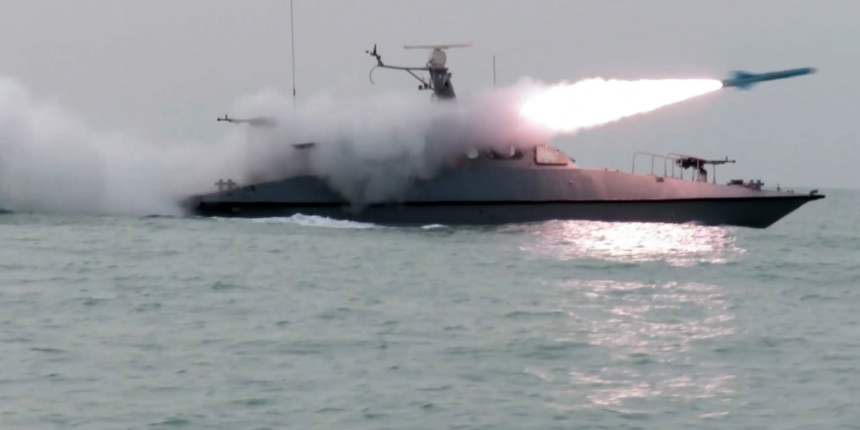
There are also other threats that are potentially even more serious. For example, Iran’s coastal areas offer spots for launching anti-ship missiles, which can be fired from close distances and provide little time for a defensive response.
Iran’s Shahed aerial drones, which have a longer range, can also be launched deeper inland and have been used to damage U.S. military and diplomatic targets around the region as swarms of the low-cost aircraft have overwhelmed defenses in some cases.
And despite losing much of its naval capabilities, the regime still has underwater and surface drones, which were used to attack oil tankers off the coast of Iraq, as well as small fast-attack boats that can threaten much bigger ships.
To be sure, the Navy has long planned for an Iranian blockade of the strait and previously escorted ships through the Persian Gulf in the past during the so-called tanker wars in the late 1980s.
But Iran’s military capabilities weren’t as sophisticated as today’s, and the Navy’s fleet was twice as large. Meanwhile, numerous ships are still carrying out operations in the Caribbean.
In addition, there are more than 300 ships stranded in the Gulf due to Iran’s de facto blockade, and the slower pace required to escort them though the strait means getting all of them out could take months—or even years.