The U.S.-Israeli war on Iran is quickly spiraling into a worldwide energy crisis as the de facto closure of the Strait of Hormuz forces top oil producers to start slashing output.
“One legacy of all this has been the nightmare scenario of the oil that flows through the Gulf being interdicted by an extended and destructive war,” he added. “The fear? That this will result in skyrocketing energy prices that send the world economy plummeting into a deep recession. Ever since the war in Iran began a week ago, Tehran has done everything it can to turn this into reality.”
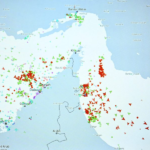
Indeed, crude prices soared 36% over the past week as Iran’s attacks on ships in the Strait of Hormuz, through which 20% of the world’s oil and liquefied natural gas (LNG) flow, effectively shut down the narrow waterway.
Iraq has cut output by 60%, dropping it to 1.7 million to 1.8 million barrels a day from about 4.3 million a day before the war. Kuwait and the United Arab Emirates have also reduced production.
Meanwhile, the LNG market has suffered a shock as Qatar was forced to throttle production. Yergin pointed out that spot prices in Asia, which depends heavily on LNG, have almost doubled since the war began, while European natural gas prices are up about 50%.
“But the most difficult scenario would be severe damage to infrastructure and a lengthy closure of the strait,” he said. “That would fuel fears of longer-term supply shortfalls.”
Iran has already started targeting the oil infrastructure of its Gulf neighbors, though air-defense systems have prevented serious damage so far. At the same time, U.S.-Israeli air strikes hit a major refinery near Tehran that supplies fuel to the civilian economy and military.
To be sure, the global economy is vastly different than what it was during the oil crises of the 1970s, with the shale revolution transforming the U.S. into an energy powerhouse while top energy-importing countries have become more resilient, Yergin noted.
While other analysts have warned that oil could hit $100 a barrel with the Strait of Hormuz closed, markets aren’t there yet. On Friday, Brent crude settled at $92.69 per barrel, and West Texas Intermediate ended at $90.90.
“Current oil prices in the $90s are far from the worst-case scenario,” Yergin wrote. “But right now, the world is looking at the biggest disruption in oil production in history as well as a resounding shock to global gas markets. The key question for global energy markets now is the duration of this explosive war.”
So far, the U.S. and Iran have shown no signs of backing down. President Donald Trump has demanded “unconditional surrender” and a say in who Iran’s next supreme leader will be. Iran has vowed to continue fighting while expanding its targets to include civilian infrastructure like desalination plants that provide most of the Gulf’s water supply.
But the U.S. and its Gulf allies have had trouble shooting down Iran’s Shahed drones, which have hit several major military targets.