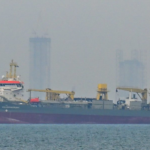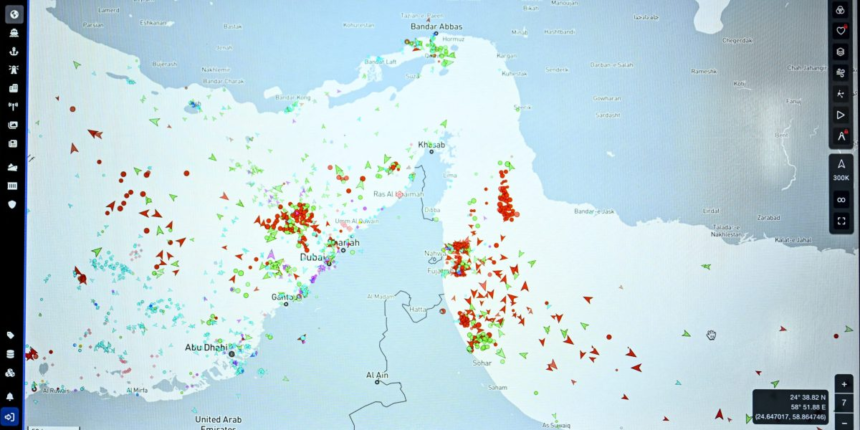
The Strait of Hormuz isn’t completely closed as several daring ship captains have risked attacks from Iran to transport cargoes through the narrow Persian Gulf waterway, with some claiming to be Chinese.
Tanker traffic has largely come to a standstill since the U.S. and Israel launched a war against Iran, which has retaliated by lobbing missiles and drones at Gulf neighbors as well as the ships ferrying energy to destinations around the world.
For example, one ship called the Iron Maiden briefly changed its signal to say “China owner” as it scurried through the strait on Wednesday, according to the FT.
About half of China’s oil imports must traverse the strait, and 90% of Iran’s oil supply ends up in China, often via third countries to evade sanctions.
As a result, Tehran relies heavily on those shipments for revenue and is also sensitive to the perception that its military is preventing tankers from reaching its ally.
But “Chinese” isn’t the only identity being used by ships, which include container vessels and oil tankers. The FT pointed to an instance last weekend, when a fuel tanker called Bogazici crossed the strait while temporarily identifying itself as “Muslim Vsl Turkish.”
To help encourage shippers to get their cargoes out of the Gulf and ease global energy markets, President Donald Trump announced a $20 billion reinsurance program for oil tankers and other maritime traffic.
Analysts have pointed out that the threat of getting blown up by Iranian projectiles is a bigger obstacle than getting insurance coverage. So Trump has also said the U.S. Navy will escort tankers through the strait if necessary.
But Wall Street remains unconvinced. On a normal day, 60 tankers—and as many as 90—go through the Strait of Hormuz.
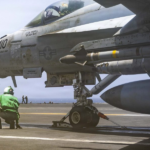
Leading up to the start of the war last weekend, the Navy had two aircraft carriers and 16 surface warships in the Middle East, marking its largest presence in the region since the Iraq war began in 2003.
Meanwhile, the U.S. and its Gulf allies have had trouble shooting down Iran’s Shahed drones, which have hit several major military targets.