The idea is that renewable power—when coupled with shorter- and long-duration batteries—can finally shed the reliability concerns of critics and offer the equivalent of baseload power provided by fossil fuel generation and nuclear power.
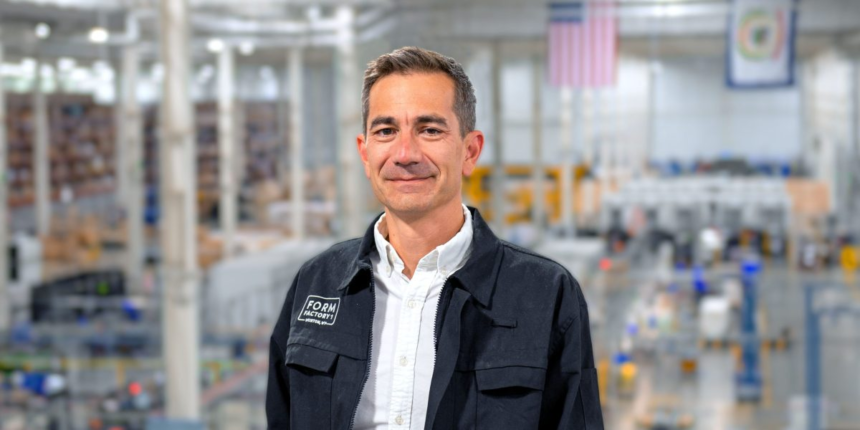
“This is the largest announced energy storage project in the world,” Form cofounder and CEO Mateo Jaramillo told Fortune. “It definitively confirms the business case for what we call multiday-duration storage.”
Standard, short-duration lithium-ion batteries have come a long way quickly on the U.S. grid. In 2020, it had about 1.5 gigawatts of total installed battery storage capacity. But this year alone, the Department of Energy projects 24.3 gigawatts of new battery storage installations—more than twice as much as new wind power and almost quadruple the new gas-fired generation capacity.
Whereas lithium-ion technologies are transferred from electric vehicle chemistries, Form’s tech instead focuses on heavier, less-efficient iron-air batteries that are, most notably, much cheaper than lithium-ion. That makes the technology compatible for long-duration electricity storage, but definitely not for EVs.
The battery technology functions through a reversible rusting process. Essentially, oxygen pumped into the cells rusts the iron through oxidation, releasing electrons. The batteries do so at about one-tenth the cost of lithium-ion, enabling the long durations.
The Google-Xcel partnership for the Minnesota data center project includes building 1.4 gigawatts of wind power, 200 megawatts of solar, and the 300-megawatt Form battery system. The 300 megawatts, scheduled for installation in 2028, are enough to power more than 200,000 homes when dispatched.
Google, Xcel, and the state are working with a new green tariff agreement called the Clean Energy Accelerator Charge that allows Google to pick its own bundled renewable energy mix so long as it’s covering the costs and not passing on charges to Minnesota residents. Massachusetts-based Form will be paid close to $1 billion for its contributions, according to The Information.
A battery storage expert and vice president at Tesla, Jaramillo left in 2017 because he felt he completed his arc there, desired to stay on the “frontier edge” of the technology, and wanted to maintain a healthy family life.
“You may have heard, it’s a relatively intense place to work,” he quipped.
Jaramillo and colleagues began experimenting with iron-air technology concepts and decided the potential was there to operate similarly at a larger, gas-fired power plant. The clean energy batteries would compete with so-called peaker gas plants that are quickly turned on and off as needed to meet rising power demand.
That led to Form. Battery technologies had been growing incrementally from 15 minutes to an hour to today’s four- and eight-hour solutions.
“We never subscribed to that perspective,” Jaramillo said. “We started the company with the premise that, if you could identify a chemistry that’s cheap enough, you could have a much longer duration, roughly four or five days.”
The short-duration batteries pair with renewables to cover the time gaps when the sun doesn’t shine for solar or the wind doesn’t blow—oftentimes wind and solar partner together well because wind power is typically strongest at night. The long-duration batteries from Form and its smaller competitors are designed for multiday weather or demand events that lithium-ion batteries can’t cover.
“That 100 hours sounds simple and like a nice, appealing round number, but it is actually very much supported by the math,” Jaramillo said. “Think about a polar vortex or a heat bomb or a hurricane or a sandstorm. Any place in the world has roughly a four-to-five-day weather signature that drives that. They are spread out over a few events over the course of the year—more or less 100-hour chunks.”
He argued that the inclusion of Form’s batteries with renewables can get data center projects approved much more quickly because utilities and regulators don’t have to account for power-generation gaps stressing the grid, given that everything is essentially self-contained.
“That 100-hour duration is what’s required to provide true, firm capacity into the system,” Jaramillo said. Without that, data center projects would require the construction of excess renewables and short-duration batteries to overcompensate, he explained.
Form’s West Virginia factory opens up later this year, and will scale up to manufacturing 500 megawatts per year of battery power by the end of 2028. The tentative plan is to keep expanding from there, Jaramillo said.
In the meantime, at the end of last year, Form began installing its first 100-hour batteries to the grid in a small, 1.5-megawatt project with Great River Energy in Minnesota.
“In parallel, we knew the market would take as long to develop as the technology,” Jaramillo said. The market demand, the technology, and the manufacturing capabilities are now coming into sync, he said.