Today’s decision by the U.S. Supreme Court striking down most of President Trump’s sweeping import tariffs under the International Emergency Economic Powers Act (IEEPA) is not only the right decision, it is a profound economic relief for American businesses and consumers alike.
CEOs have been sounding the alarm over the last year, all but begging to be liberated from liberation day. Top businesses nearly universally saw those tariffs as bad for business, no matter what Howard Lutnick and Peter Navarro said as spin.
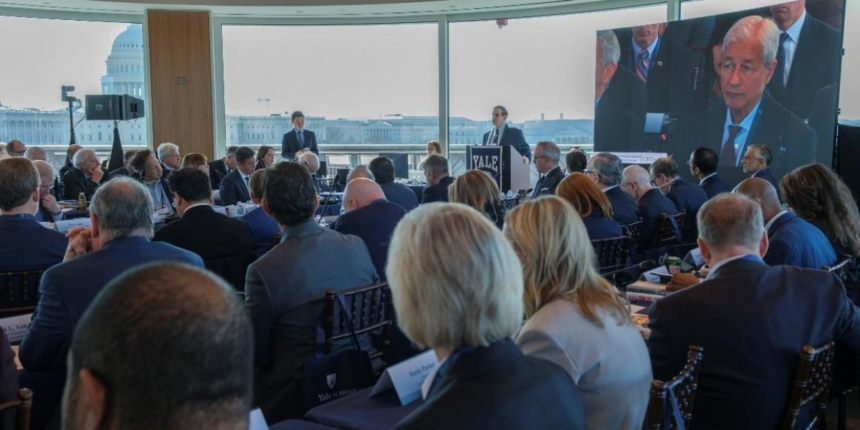
The warnings that these tariffs were not penalties paid by foreign adversaries, but rather punitive taxes paid directly by American businesses and consumers could not be more clear, with the clear message that these policies were fundamentally bad for the economy. Indeed, at our prior Yale CEO Caucus, attendees were asked if they were planning to invest more in US manufacturing and infrastructure – and 62% said no.
There is no question that the Supreme Court’s ruling serves as a highly public and humiliating rebuke to Trump; and indeed, in his speech immediately after today’s ruling, Trump was already signaling that he will double down, threatening a flurry of new tariffs under Section 122 of the Trade Act of 1974 to impose a temporary 10% global tariff while his administration pursues other, more permanent trade authorities, as well as new section 301 investigations which usually precede the imposition of new tariffs. That gambit may be legal, but it perpetuates the same damaging uncertainty that paralyzed investment decisions over the past year.
The effect of this uncertainty will be far more damaging in the long run than moving interest rates a fraction of a point, as Trump seeks to jawbone the Fed into doing. Most responsible CEOs cannot and will not commit capital to new plants or equipment if they can’t forecast costs, with tariffs fluctuating by the day.
The Supreme Court itself is not blameless for the lingering uncertainty. Justice Brett Kavanaugh’s dissenting opinion is anchored in the complications over refunding the tariff revenues collected over the last 10 months. That is at least in part the Supreme Court’s own fault. The original IEEPA tariffs lawsuit was filed nearly 10 months ago, and the delay in ruling was entirely their own decision. The Supreme Court has issued approximately 25 shadow docket decisions over that time for emergency action on issues of far lesser consequence. Many analysts expected the Court to rule on tariffs around Thanksgiving or Christmas, but instead they apparently thought it was more important to rule in favor of Elon Musk’s DOGE firings, even though DOGE is now largely shuttered, or their ruling allowing firings of transgender military personnel. In the Court’s eyes, those were apparently far more urgent immediate national priorities than tariffs over these last 10 months.
Today’s Supreme Court decision vindicates the wise warnings of CEOs, who have been sounding the alarm bells publicly and privately for months. But far from being liberated from Liberation Day, sadly, Trump’s predictable response only exacerbates the uncertainty and chaos from his tariffs, with a continuing, damaging effect on business confidence and investment.
The opinions expressed in Fortune.com commentary pieces are solely the views of their authors and do not necessarily reflect the opinions and beliefs of Fortune.