The Trump administration’s embargo on Cuba—effectively cutting off 75% of the communist-ruled island’s crude oil supplies—is quickly pushing the Havana leadership to a point of no return amid escalating fuel shortages and frequent blackouts.
“The fuel situation in Cuba will get pretty dire pretty fast. That’s going to put tremendous pressure on the government because energy—whether it’s oil or electricity—is the lifeblood of any country,” York said.
“And, if the U.S. stays the course, they will board any sanctioned tankers that are heading toward Cuba,” he added.
Not only is Cuba facing dwindling vehicle and jet fuel supplies, but most of Cuba’s electric grid relies on crude oil, too. The island has very limited natural gas and renewable energy assets.
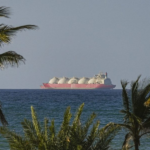
Cuba produces only a little bit of oil domestically, not nearly enough to sustain itself. About 75% of Cuba’s oil imports typically come from Venezuela and Mexico. The U.S. cut off Venezuelan supplies to Cuba at the beginning of this year. And a Trump executive order at the end of January, which threatened tariffs against countries that supply Cuba with petroleum, led to Mexico reluctantly ceasing exports as well. In the meantime, Cuba is leaning on whatever reserve stockpiles it has left.
Cuba says Trump is creating a dangerous precedent of using tariffs to strangle and starve individual nations. Cuban President Miguel Diaz-Canel accused the Trump administration of acting with a “fascist, criminal, and genocidal nature of a clique that has hijacked the interests of the American people for purely personal ends.”
Russia said the U.S. is trying to “suffocate” Cuba, and said it planned to send more oil supplies to Cuba. But how such plans would play out is not yet clear. In the meantime, Russia has suspended civilian flights to Cuba after evacuating its tourists from there.
The White House has confirmed the embargo remains in effect, and argues that it is holding Cuba accountable for its alleged long support of regional instability and terrorism.
Speaking earlier this week on Air Force One, Trump said, “Cuba is right now a failed nation, and they don’t even have jet fuel to get airplanes to take off. They’re clogging up their runway.”
Trump argued the Cuban leadership “should absolutely make a deal,” not stating what the U.S. is demanding in return.
“We are talking,” Trump added. “In the meantime, there’s an embargo. There’s no oil, there’s no money, there’s no anything.”
Forcing political change in Cuba—even if not a full regime change—could mark a strong accomplishment for the Trump administration. Prominent figures in Trump’s inner circle include “Florida hawks” such as Secretary of State Marco Rubio, who is Cuban-American, and White House Chief of Staff Susie Wiles, said Fernando Ferreira, director of the geopolitical risk service at Rapidan Energy Group.
“It could mark the success of this ‘Donroe Doctrine,’ accomplishing regime change or political change in two U.S. adversaries in the region,” Ferreira said. “Starting with Venezuela, there’s a very clear domino impact. Cuba has been largely dependent on Venezuela for oil supplies and for political cover.
“The lack of fuel supplies into Cuba is having fairly severe impacts,” Ferreira added. “It’s going to have a humanitarian impact in Havana and the rest of Cuba. What I don’t know is how quickly or to what extent it’s going to lead to political change on the island.”
Rubio is taking the lead on such matters with a “pretty long leash,” York said. Rubio is likely to be more “adversarial” with Cuba than typical U.S. diplomats, but it still comes down to Trump being the moderator and dealmaker.
Diaz-Canel is the first non-Castro to lead Cuba in 60 years. A key question is whether he is willing to find a resolution with the U.S. or if he will be perceived as weak for compromising with Trump, York said.
“[Diaz-Canel] might be concerned about his legacy and his physical safety if he’s the weak chain that broke,” York added.
It’s unclear what the U.S. would require in a deal as well. Is leadership change on the table? An opening up of the communist economy? Reducing Cuba’s ties with Russia and China?
What we do know is that Cuba’s leadership has relatively limited options and that the energy crisis could further escalate rapidly.
“Cuba is a pretty opaque part of the Western Hemisphere,” York said. “My guess is over the next few weeks, few months, that curtain is going to get drawn back a little bit, and we’re going to get to see the inner workings of the Cuban government.”