“I felt like Austin Powers where they suck the mojo out,” he told Lex Fridman in a recent, sprawling interview. “I couldn’t get code out anymore. I was just, like, staring and feeling empty.”
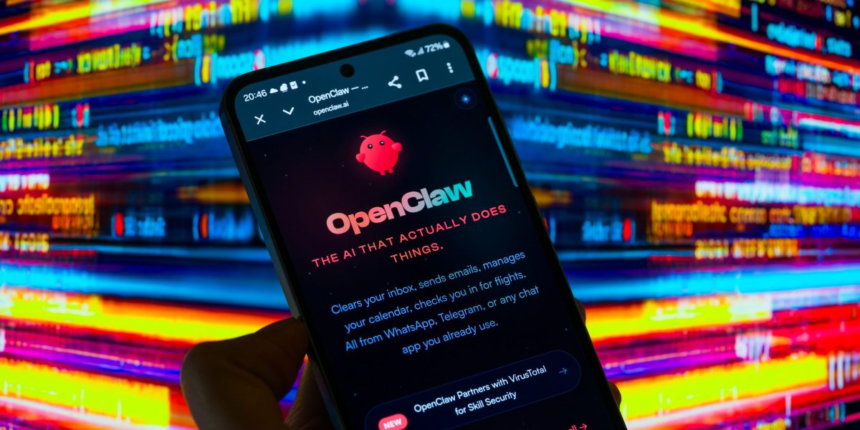
The project, which Steinberger has rebranded multiple times—evolving from Clawdbot to Moltbot and finally to OpenClaw —largely due to politics—has expanded at a pace that startles even seasoned AI experts. By early February, the framework had surpassed 145,000 GitHub stars, a record, and recorded peak traffic of two million visitors in just one week.
But that rapid ascent has also brought significant challenges for Steinberger. He said he navigated a very high-profile disagreement with Anthropic over the project’s original name, and his attempts to transition his digital handles were complicated by bad actors associated with cryptocurrency who briefly hijacked his accounts.
“I was close to crying,” he admitted to Friedman, saying that he was close to deleting the project while exhausted from managing the viral sensation and serving as his own legal and security team. ” I was like, ‘I did show you the future, you build it.’”
But Steinberger persevered and built it himself, motivated by the “magic” he saw when the agents began solving problems he hadn’t explicitly programmed them for, such as transcribing voice messages or even proactively checking on his well-being after surgery.
Steinberger said that to preserve the project’s community-driven roots, OpenClaw will now move into an independent, open-source foundation supported by OpenAI.
“I told them, I don’t do this for the money,” he told Friedman. “I want to have fun and have impact, and that’s ultimately what made my decision.”