In the corporate world, such “generals” had repeat transformational impact on their enterprises but their returns allowed things to stabilize and begin building again. But as the chief executive of one of the most iconic enterprises in the world, few decisions are as important as ensuring the successful long-term transition of the organization to the next generation of capable leaders.
Iger has become one of the most iconic, admired, and capable leaders in the media world. He mastered strategic technological, consumer, and global diplomatic shifts while also resolving inherited domestic political battles and industrywide writer and director contractual challenges, acting as the pillar of leadership for the entire sector. It is impossible to imagine where this great global iconic enterprise would be now if Iger did not interrupt a comfortable retirement in 2022, not just to secure his already revered tenure, but to safeguard a Disney legacy that had come under extreme duress.
The selection of D’Amaro will be closely scrutinized by Wall Street over the coming months, following the relatively brief but tumultuous term of Bob Chapek, who was tapped in 2020 to succeed Iger. Upon his return, Iger moved quickly to remedy the damage caused by Chapek, learn from his failings, and establish a more robust succession plan, drawing on his experience and that of others.
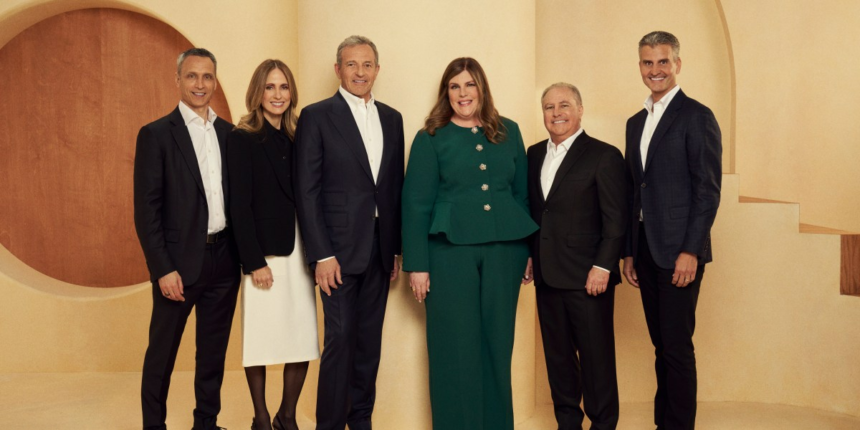
Three key takeaways from that planning have become apparent with the official appointment of D’Amaro and Walden. First, D’Amaro does not suffer from the myopic, centralized operator mentality ascribed to Chapek, appreciating the creative talent that is core to Disney magic. Second, Walden’s promotion addresses any experience gap D’Amaro has in the highly creative, relationship-driven environment of the Entertainment segment, analogous to a strategy Iger used to supplement his limitations in the Experiences segment when he was appointed CEO in 2005. Finally, Iger and the Disney board humbly sought deeper guidance from leaders with proven success in succession planning.
Despite both D’Amaro and Chapek having served as Disney Experiences Chairman immediately before their appointment to the top job, the executives took two very different paths to get there.
Chapek was a skilled operator with a well-known preference for following tight budgets and schedules. However, his admirable career trajectory unfolded in consumer products, where he spent nearly three decades developing skills in data analysis, licensing fees, and cost minimization. In contrast, D’Amaro shaped his career within the theme parks division. He joined the company in 1998 at Disneyland Resort and rose through the division’s operations, eventually becoming president of Disneyland and then Walt Disney World.
The Disney board has rightly highlighted D’Amaro’s deep understanding of the organization’s creative spirit. Yet, the reality is more about structural qualities than personal traits. D’Amaro has built stronger relationships and discusses storytelling and creativity more fluently than Chapek did, even as his Hollywood experience is limited. Enter Dana Walden, who was elevated to President and Chief Creative Officer and positioned as an essential leadership component of the transition.
Also worth noting are the circumstances surrounding Iger’s appointment as CEO. He came to Disney as a respected television and broadcast executive but had comparatively limited expertise in theme parks or consumer products. At the time, limited theme park experience was not considered a significant liability; it was seen as an important but manageable operational challenge that could be managed through smart delegation. Television and content were still regarded as the “heart” of Disney, and Wall Street expected a CEO to have direct fluency.
Additional vital members of this loyal dream team include such long-term Disney stars as Alan Bergman and Jimmy Pitaro. Bergman has served as Co-Chairman of Disney Entertainment, since 2023, with oversight duties guiding the global content portfolio for studios including Disney, Marvel, Pixar, Lucasfilm, and 20th Century Studios, having previously brilliantly led the integration of these studies. Bergman produced the entertainment division’s highest-grossing era ever, producing hits such hits as the Avengers: Endgame, Avatar: The Way of Water, Frozen, and The Lion King plus 28 films that yielded over $1 billion each. He has brought in a record $11 billion-plus in annual box office results and sparked Disney+ content growth. Jimmy Pitaro, the Chairman of ESPN, has similarly served as a top Disney executive since 2010, driving massive digital, consumer product, and sports media successes. Previously, he led drove the turnaround of Disney Interactive, managed global consumer products for major brands, and oversaw the launch of ESPN+ and the upcoming “Flagship” direct-to-consumer service, fortifying his future value the business.
Iger’s most significant acquisition was not Pixar, Marvel, or Lucasfilm. Instead, it was the hard-won wisdom to identify mistakes and implement a succession plan to avoid repeating them. With D’Amaro, Walden, and Johnston in key roles, Disney has built a leadership team capable of both preserving and expanding the company’s historic legacy.
The opinions expressed in Fortune.com commentary pieces are solely the views of their authors and do not necessarily reflect the opinions and beliefs of Fortune. This column has been updated to include an additional paragraph.