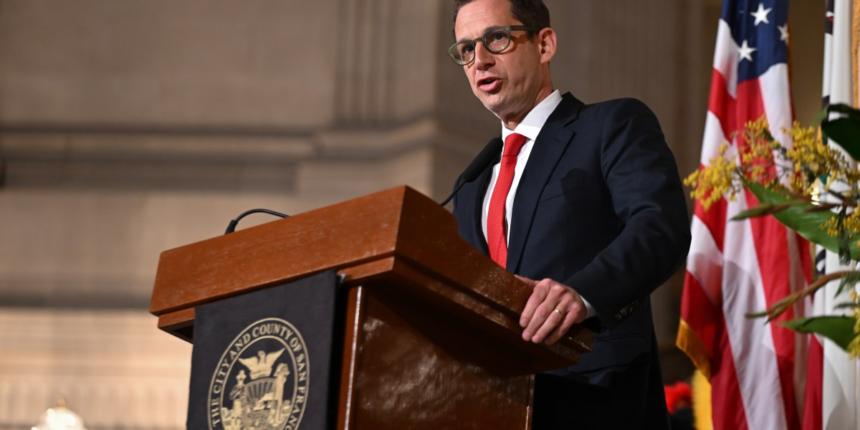
Since taking office in 2025, San Francisco Mayor Daniel Lurie has been on a mission to shake the city out of a post-pandemic economic slump.
Now, Lurie has leveraged his connections across industries to boost the city’s reputation and economy following a slow recovery. Years after the pandemic, San Francisco’s downtown is still struggling with a high vacancy rate and facing long-term issues with open-air drug markets and homelessness.
Lurie has been a vocal advocate of change in the city and has long championed bringing new business to the city. As chairman of the city’s host committee in 2013, Lurie persuaded the NFL to host the Super Bowl in the Bay Area when Levi’s Stadium in Santa Clara was still under construction. Now, as the city’s leader, Lurie is hoping lightning strikes twice.
As football fans get ready to descend for Sunday’s Super Bowl LX, the entire Bay Area is preparing for a major economic windfall. San Francisco is expected to be the hub of tourism traffic, giving Lurie the opportunity to offer sports fans a taste of what to expect when the FIFA World Cup follows this summer. He’s hoping it advertises all the progress being made under his back-to-business approach.
A native San Franciscan, Lurie founded Tipping Point Community, an anti-poverty nonprofit, in 2005. The organization has invested more than $440 million in services for housing, early childhood education, and employment across the Bay Area. He led the organization until he began running for mayor.
“We are ready to show off our restaurants, our small businesses, our parks,” Lurie said in a press conference on Monday. “There will be a lot of traffic this week, but I think with the economic impacts coming, I think it’s going to be well worth it.”
Last year’s NBA All-Star Game in San Francisco generated $328.2 million in economic impact, according to a study by the Temple University Sport Industry Research Center. Nearly 143,000 people from 40 states and 44 countries attended the event.
“Everybody should be paying their fair share,” Lurie said. “But if people can up and flee, I’d rather see something done at the national level.”
Lurie told Fortune the city must “strip away the red tape” for small businesses, and that he sees the government as a partner to businesses.
Since Lurie took over, the city has seen its vacancy rate decrease by 6.5%, and its tourism is up post-pandemic, even before the Super Bowl and World Cup boost. AI startups are flooding into San Francisco, and 85 of the 133 AI companies that signed leases in the city in 2025 were early-stage startups, the Standard reported.
“This is the greatest city in the world when we’re at our best,” Lurie told Fortune. “And I think people are starting to see that again.”