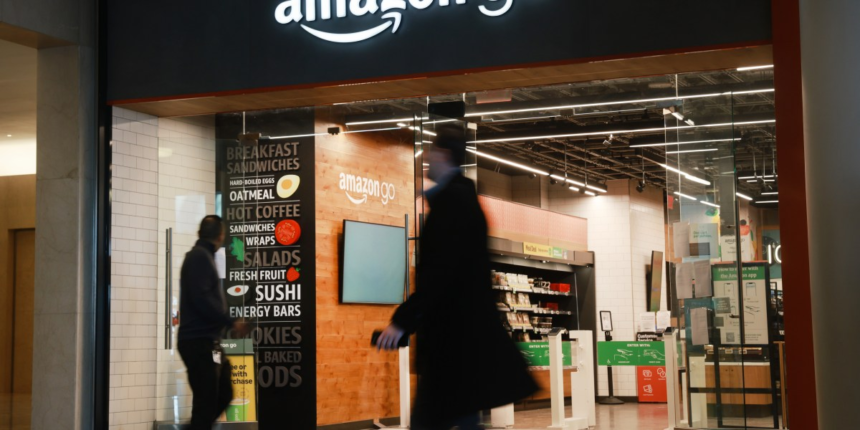
The e-commerce giant said on Tuesday that it was closing its “Fresh” grocery stores as well as its automated grab-and-go “Go” shops, adding to its list of failed brick-and-mortar experiments.
Amazon’s 550-store Whole Foods chain, which it bought in 2017, will remain open with plans to expand. But the brand’s 58 Amazon Fresh stores, launched in 2020 as smaller grocery stores focused on the mass market, never found their niche. Amazon’s Go convenience stores, launched in 2018 and a major priority for founder Jeff Bezos, allow consumers to avoid checkout lines thanks to an array of cameras and sensors that tracked each item a shopper picked from a shelf and automatically charged the customer for it when it left the store. But the dazzling tech was not enough to camouflage how blah the merchandise was.
As Amazon showed the many retailers it has disrupted over the years, standing out from the competition—whether on pricing, on service, or on merchandise—is essential, and on that front, Go and Fresh struggled.
These failures illustrate a weakness in Amazon’s retail concepts: In brick-and-mortar retail, logistical and operational excellence isn’t enough on its own. Crafting an appealing in-store experience requires merchandising and presentation prowess. “The blunt truth is that neither Fresh nor Go stores offered this,” Neil Saunders, managing director at GlobalData said.
But even if they didn’t survive, Amazon’s brick-and-mortar retail concepts arguably show a strength of Amazon’s company culture: A pragmatic approach of allowing failure but also of cutting losses and moving on with new lessons learned. Armed with the insights gleaned from Go and Fresh, Amazon is refining and expanding its new five-store, small format Whole Foods Market Daily Shop, which will serve as mini-convenience stores. It will also stock more produce and perishables in its same-day delivery warehouses and at more Whole Foods stores.
And these failures show why Amazon is ultimately successful at almost everything it does: The “Just Walk Out” cashier-less systems may not have been enough to save Amazon’s 14 Go stores, but its tech is now sold as a service to more than 360 third-party locations.
To describe the company’s indefatigable approach, Saunders referenced the catchphrase of Arnold Schwarzenegger’s killer robot in the 1984 sci-fi Terminator. “In our view,” he said, “in one way or another, Amazon’s physical grocery mantra is: We’ll be back.”