The Nikkei 225 stock index fell 1.79% this morning. That’s a sign that traders feared equities exposed to Japan’s export trade would be hurt by a rising yen.
“It used to be the case that any eruption of geopolitical tension tended to rally the world around the U.S. dollar. That’s because the U.S.—despite its role as guarantor of the old order and its obligation to join the fights—was still seen as the safest and most accessible redoubt or haven for global ‘flight capital,’ and because it had a history of being relatively unscathed (territorially) from the conflicts it itself participated in or enjoined,” according to Macquarie’s Thierry Wizman.
“But what is happening now is different. Instead of flocking to the USD, traders flock to gold and its neighbors on the periodic table (e.g., silver, platinum) and defense stocks, and the USD has little to show for its erstwhile vauntedness. We think that this is because the implicit arrangements that have prevailed since WW2 are unraveling, however slowly,” he told clients in a note seen by Fortune.
At UBS, Paul Donovan was similarly downbeat. “The deterioration in the international standing of the U.S. and recent domestic events may be corroding some of the perceived supports of the dollar’s reserve status,” he told clients today.
In the U.S., everything is on hold for the Fed’s interest rate decision on Wednesday. S&P 500 futures were down 0.12% this morning after closing flat at 6,915 on Friday.
Almost no one thinks the Fed will move the base rate level (it’s currently at the 3.5%-plus level). Speculators on the CME FedWatch Fed Funds futures index think there is a 97% chance the rate stays on hold.
That potentially sets up some fireworks later in the week, as President Trump has been vocal in calling for lower rates. Ironically, his public aggression on the issue has made the Fed marginally less likely to cut rates, as the Federal Open Market Committee is now under pressure to demonstrate its political independence.
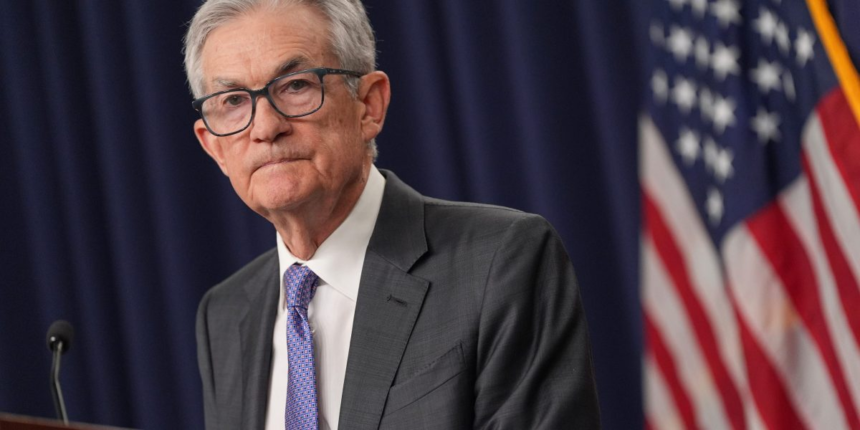
The drama in the Fed’s decision, therefore, will center on which words Chairman Jerome Powell uses in his Q&A with the press.
“While the FOMC is expected to keep its policy rate between a range of 3.5% and 3.75%, the real action will be at the news conference afterward on Wednesday, when Federal Reserve Chair Jerome Powell will face reporters,” according to RSM chief economist Joe Brusuelas. “We expect that Powell will use his platform to provide an erudite but accessible defense of central bank independence. The discussion around central bank independence will suck all the air out of the room and will most likely see a real-time response out of the White House.”
Here’s a snapshot of the markets ahead of the opening bell in New York this morning: