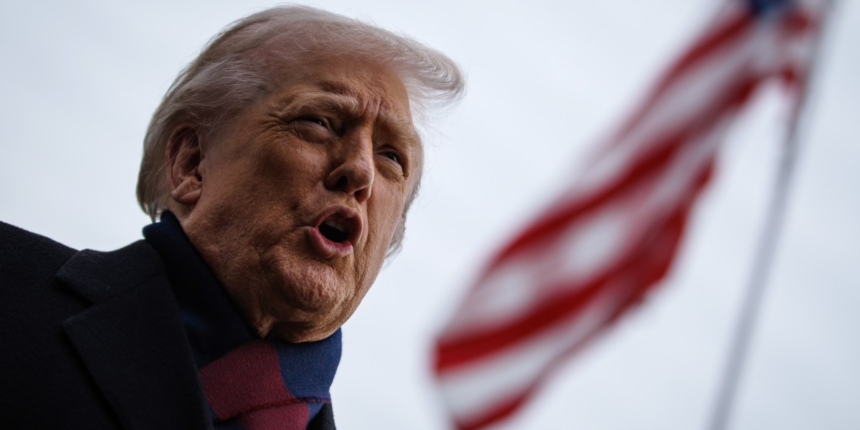
While some economists later echoed Trump in saying the Federal Open Market Committee (FOMC) should cut rates, the public outpouring of Trump’s fury was extraordinary: Trump called the chair “Too Late Powell,” a “stubborn mule,” a “major loser,” and a “stupid person.”
Other autonomous agencies got the message: If Trump is willing to take on the Fed, they might be next.
“How much can truly change under a single administration?” I asked one source. “Three years is a long time yet,” was the response.
Since January, many federal employees inside and outside the Fed have quietly decided that discretion is the better part of valor. To the relief of Wall Street, the Fed’s most prominent figures haven’t gone to ground entirely.
While the temperature has dropped for now, sources say, they’re preparing for the mercury to start rising again early next year. The reasoning that an independent Fed leads to better economic outcomes is widely accepted. But if Trump succeeds in ousting Cook, then the Fed’s autonomy looks less secure—potentially leading to inflationary sentiment.
Analysts’ concerns over the Fed’s independence don’t descend as low as comparisons to President Nixon and Arthur Burns, however, when an alignment on monetary policy between the White House and the Fed plunged the economy into a crisis.
Selective silence is a tactic on which it seems everyone, at last, can agree. Critics argue that the Federal Open Market Committee—with its mysterious dot-plots and the breadcrumbs its members occasionally drop into speeches—engages the attention of Wall Street a little too much. Treasury Secretary Scott Bessent has been lobbying for a “back-seat” Federal Reserve, something insiders will be only too happy to oblige.
On the other hand, the Federal Reserve system is mandated to answer to Congress and, by extension, the American public. In an era of economic volatility, with business leaders and consumers alike unsure of the path forward, a void of insight from key decision-makers could be damaging and frustrating.
There’s also been a delicate balance to strike between pushing back on claims about bias within the Fed and reminding the public that the Fed is focused mainly on, and is guided by, its mandate.
Another awkward question is who’s actually in charge. Secretary Bessent has made it clear that in the search for a new Federal Reserve leader, he wants to appoint a “shadow chair,” someone to be the true power at the Fed while Powell is increasingly overlooked as he nears the end of his term in May.
It was not a popular idea, but the White House has proceeded with a very public recruitment process ever since. Potentially impacted parties are keeping an eye on front-runners, they said, without becoming overly invested in outcomes that may never come to pass.
One concern is that the broadcast nature of the selection process means pressure is already piling onto the shoulders of the would-be nominee, who must wrangle expectations without having accumulated real influence within the central bank.
Wall Street is also preparing for some early hiccups. Until the past few meetings, Powell’s run had been one of steady consensus. As UBS chief economist Paul Donovan said in a note to clients this week: “What is perhaps more interesting today is the extent of division within the Federal Reserve. This is potentially storing up trouble for Powell’s successor as Fed chair. A Fed that is prepared to dissent under Powell may be more inclined to dissent under a Fed chair who commands less respect in the institution, and the wider financial markets.”