Jelly Roll’s convictions include robbery and drug felonies. He has said a pardon would make it easier for him to travel internationally for concert tours and to perform Christian missionary work without filling out burdensome paperwork.
He was one of 33 people to receive pardons Thursday from Lee, who for years has issued clemency decisions around the Christmas season. Lee said Jelly Roll’s application underwent the same monthslong thorough review as other applicants. The state parole board gave a nonbinding, unanimous recommendation for Jelly Roll’s pardon in April.
“His story is remarkable, and it’s a redemptive, powerful story, which is what you look for and what you hope for,” Lee told reporters.
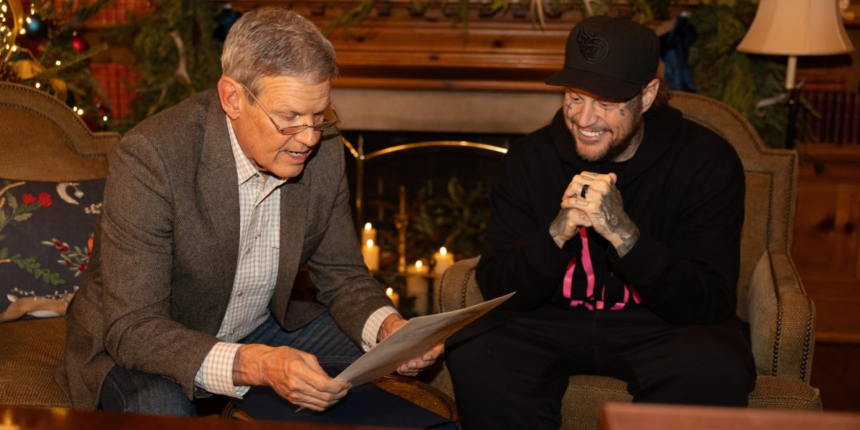
Lee said he never met Jelly Roll until Thursday, when the musician visited the governor’s mansion over the pardon news. The two hugged in front of a lit Christmas tree and a fireplace decorated with holiday garlands.
Much of his music deals with overcoming adversity, like the song “Winning Streak” about someone’s first day sober. Or the direct-and-to-the-point, “I Am Not Okay.”
Before the parole board, Jelly Roll said he first fell in love with songwriting while in custody, calling music a therapeutic passion project that “would end up changing my life in ways that I never dreamed imaginable.”
“I was a part of the problem,” he told lawmakers at the time. “I am here now standing as a man that wants to be a part of the solution.”
Jelly Roll’s most serious convictions include a robbery at 17 and drug charges at 23. In the first case, a female acquaintance helped Jelly Roll and two armed accomplices steal $350 from people in a home in 2002. Because the victims knew the female acquaintance, she and Jelly Roll were quickly arrested. Jelly Roll was unarmed, and was sentenced to one year in prison plus probation.
In another run-in 2008, police found marijuana and crack cocaine in his car, leading to eight years of court-ordered supervision.
Friends and civic leaders cited his transformation in backing a pardon.
“I think he has a chance and is in the process of rehabilitating a generation, and that’s not just words,” Hall said in a phone interview Thursday. “I’m talking about what I see we need in our country, is people who accept responsibility, accept the fact that they make mistakes and accept the fact that they need help.”
The parole board began considering Jelly Roll’s pardon application in October 2024, which marks the state’s five-year timeline for eligibility after his sentence expired. Prominent Nashville attorney David Raybin represented Jelly Roll in the pardon case.
Lee’s office said no one was pardoned Thursday who had a homicide or a sex-related conviction, or for any crime committed as an adult against a minor.