Two centuries later, that guiding principle of modern architecture is getting turned on its head–or at least placed on its side.
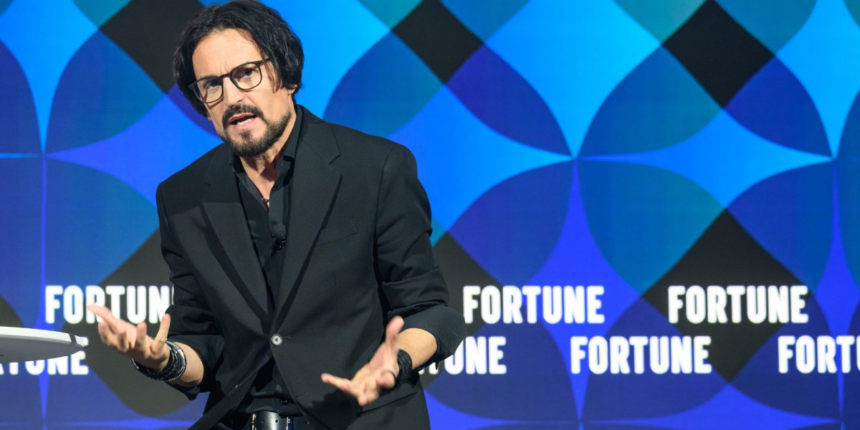
“When form follows function architecture is limited to utilitarian problem solving. It offers no more than is asked of it,” architect Ole Scheeren said during the Fortune Brainstorm Design conference in Macau on Tuesday.
“Architecture needs to go beyond the plan, program and diagram,” he added. “We think of buildings as living organisms…Narrative stories anticipate the buildings that we design, but the buildings write their own stories when they come to life.”
Now the principal of architecture firm Buro Ole Scheeren, the architect has embarked on a trademark, contrary approach to designing buildings, melding form with fiction, referring to the stories of the people who inhabit and use the facilities, and remaking the maxim which dictates that building’s exterior should match what’s done in the building’s interior.
A fan of movies, Scheeren sees similarities with the experience of film watching and his approach to buildings. “A film takes you on a journey…architecture has the potential to do the same,” he told the Fortune conference.
“When form follows artificial intelligence, we are overwhelmed by the endless possibilities that apparently we never even thought of, and by all the things that AI can do for us,” he said, wondering “at which point do we start to surrender judgment and decision-making.”
Later, he noted that some tasks needed to remain manual and analog, even in a more digitized world. By virtue of the fact that buildings exist in the real world, tasks can’t be fully offloaded to AI.
“I do believe…the judgment of what is really meaningful in a particular situation is something that will not be easily delivered by machines,” he said.