In 2026, employer healthcare costs are expected to see their largest increase in 15 years.
Ty Wang, Angle Health CEO and cofounder, said that while there’s been “an explosion of new ways of receiving medical services” like telehealth, digital pharmacies, and chronic disease management programs—these benefits mostly accrue to employees of large tech companies or major white-collar firms.
“These services are still largely inaccessible to the vast majority of Americans,” he said.
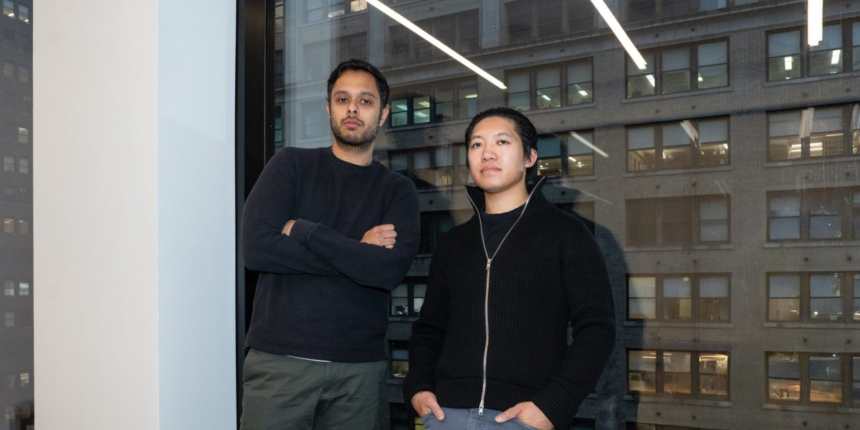
In 2019, Wang cofounded Angle Health, an AI-driven healthcare benefits startup, with fellow Palantir alum Anirban Gangopadhyay. Now, Angle has raised a $134 million Series B, consisting of both equity and debt, and led by Portage, Fortune has exclusively learned. The company says it serves more than 2,600 small business employers in 44 states.
“We’ve been able to very effectively use AI in areas where a human should not be manually administering things that they otherwise would be,” said Gangopadhyay. “We quote thousands of groups a week. In any other company, you’re getting quoted these PDFs that are 12, 15, 20 pages long. And they’re parsing through these PDFs manually…We’ve fully automated and optimized that process where our underwriters and our sales people are only doing the pieces that we need a human to be doing.”
Small businesses face particular difficulties when providing healthcare, often operating with poor broker support, limited transparency, and no bargaining power.
“The SMB market is a large part of the population that is often forgotten,” said Wang. “There’s absolutely no transparency. There’s very little predictability, and the incumbents are able to gatekeep the data that’s available to them.”
Wang and Gangopadhyay told Fortune that Angle is devoted to transparency, cost stability, and detailed reporting in an effort to improve healthcare experiences and cost surprises. There’s an awareness that this is a systemic problem, albeit one that can be vastly improved (and over time, slowly rebuilt) by technology.
“We don’t believe that an insurance company is going to really solve healthcare,” said Gangopadhyay. “We think that the future of healthcare is a completely redesigned ecosystem that is using AI-first, tech-first products and workflows to really unlock the best care for members.”
See you tomorrow,