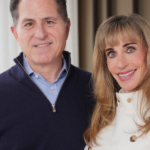
The Dell gift will add $250 to the accounts of 25 million children ages 10 and under who aren’t eligible for the federal grants and live in zip codes where the median household income is $150,000 or less. About 80% of American kids in this age group would qualify for a Dell donation under that criteria. The prospect of free money, however small, could encourage families to open an account. Dell spoke with Fortune about the thinking behind this gift and his philosophy of giving.
This interview has been edited and condensed for clarity.
You voiced support when these accounts were first proposed, pledging to match the federal contribution for newborn children of Dell employees. Why does this resonate with you and your wife?
I first heard about this in 2021. Brad Gerstner (Altimeter Capital CEO and architect of the plan) had been championing this idea and told me about it. I talked to Susan about it. We’re like, this would be great. This would just be fantastic. This is going to be like a platform for families and communities and companies and philanthropists to contribute to these accounts for children. The more we thought about that, we thought maybe we should do something big here. We came up with the idea of $250 as it’s also the 250th birthday of America on July 4.
Even with small sums, children are much more likely to graduate from high school, graduate from college, start a business, are less likely to be incarcerated. It also improves the mental health of both the parent and the child. When children have accounts like this, their outlook on life just changes. I’ve also spoken with a number of other philanthropists, and I’m confident that others will join us with major gifts.
When these accounts were proposed, some said the money could be better deployed in other ways, such as something that operates more like a Roth IRA or a 529 savings plan for college.
How do you do something like this, at this scale, for 73 million children? I think there was a lot of work that went into figuring out what is the easiest and best way to do that, and make it work operationally. I wasn’t very involved in those discussions. It could have been in other forms, and maybe that would be fine, but we like the way this has come together.
The important thing is that the child is going to be able to use the funds for education, for job training, their first home, to start a business. They can continue saving and it becomes like an IRA account when they’re 18.
Has your own philosophy of giving shifted since you set up the foundation in 1999?
It would be hard for it not to, but we have focused on children in urban poverty since the beginning. Certainly, the scope and size of it has changed as we’ve had more opportunity to make an impact, and we’ve learned what works and what doesn’t. We’re very results-oriented, data-driven, outcome-focused. We took all the lessons from business and treat every grant like an investment. At any given time, there are 800-plus grants around the world, and it’s always evolving.
What do you think about the opportunities for children in this country right now? There’s been a lot of attention on the upper end, the Gen Zs, and the kind of job opportunities they face in this environment. There’s certainly more discussion about the income divide.
We are targeting families with a median income of $150,000 or less, which covers roughly 75% of all zip codes In America.
You occupy a unique perch as a founder who has lived through different eras of technology. What’s your perspective on the opportunities you see for kids born today in the U.S.?
I meet with a lot of young people and young entrepreneurs. What I would tell you is that they have an enormous advantage in that they’re not so grounded in the past. If they have unique insights and they’re creative and they’re aggressive and willing to take risks as entrepreneurs are, then there’s tons of opportunity out there. The rate of change is increasing and that means there’s more opportunity. You won’t find anybody who starts a business who’s not optimistic.
There are tons of people like that in this country. We’re fortunate that we have a system that embraces that kind of risk and experimentation. Sometimes they get backing, and sometimes they don’t. We are unique as a country in our ability to create those new businesses.
I used to live in Nairobi and Hong Kong. I found difference back then was not so much the standard of living but that you’d find people changing money on the street in parts of East Africa whereas, in Hong Kong, a lot of people had multi-currency accounts. It drove home to me the importance of feeling invested in the institutions that underpin a country. How do you think about the importance of having a bank account as opposed to other means of supporting kids?
Equity investments over time have done far better than, say, a savings account or a bond.
We have challenges in this country around financial literacy. When I was about six or seven years old, I got a passbook savings account. I had maybe $6 or $7 in it. I’d go to the Savings & Loan, put in a quarter, and they’d stamp my book. I learned about compound interest and savings and, I’m like, this is really cool. I started learning about math and investing. My mom was a stockbroker, so my parents would talk about that all the time. That ignited an interest in me. Hopefully, these accounts will cause children to want to learn more about compound interest and the companies in the S&P 500 and investing and saving.
One thing with the (Trump Accounts) program is a sense that it’s political. Or do you see this as non-partisan? Does it give you pause when you’re supporting initiatives that come out of Washington, as opposed to, say, building a hospital facility?
To us, it’s not political. I’ve spoken with senators and members of Congress, Democrats and Republicans. There’s pretty broad bipartisan support for this. You can talk to Senator Booker or Senator Cruz, Ro Khanna or Blake Moore or Speaker Johnson. They’ve all been strong supporters of this. Why wouldn’t somebody support this?
If you’re Scrooge, I guess. It’s such a polarizing time in the country with this sense of us and them. And I don’t know if that’s something that worries you.
Certainly, it would be better if there was not the polarization.
How significant is this gift?
It’s certainly the largest gift we will have given. Our philanthropy so far has given about $3 billion and this is more than double that. We’re working on a few other things that we’re not ready to announce but there is more to come.
Why now, in terms of the size?
I think the ‘why now’ is that on July 4, 2026, it’s the 250th birthday of the country and that’s when this Invest America Act becomes the law. We view this as an incredible opportunity to start these 25 million children off with a little bit of a boost—the children who were not included in the government program. And it’s totally consistent with what we’ve been doing with our foundation for the last 26 years.
What message do you have for your peers in terms of opportunities to give back?
I think most companies are going to engage with the program with some kind of matching contribution to the government’s contribution. When a baby’s born, you get $1,000 from the government. Let’s say you get another $1,000 from an employer. You do the math and this starts compounding in a pretty serious way. If the parent adds a little bit each month, there could be some employers that would add additional funds as a benefit. I think this is a platform that can be very powerful. In 20 years or 30 years, it could turn into something very significant in this country.
Talk about the role that Susan plays in the foundation. This is obviously a team effort.
You’re also at the forefront of AI. How do you think that’s going to impact the opportunities for this next generation of kids coming up, the Gen Alphas and below?
As we get new tools and better tools, are we doing to do the same amount of work with fewer people, or are we doing more work with the same amount of people? Put me down for more work with the same amount of people. In other words, I think the economy and productivity expand as we get better and new tools. In any kind of short-term context, there can be dislocations, and that’s where we need retraining and reskilling. You’ve probably heard the expression that it won’t be AI that replaces you but someone who knows how to use it better than you.
That’s why I’ve done an AI boot camp.
Everyone needs to do that. This is super powerful stuff. Obviously, we’re transitioning from calculating and computing into thinking and helping us think, and I think it’s going to accelerate scientific discovery and drive enormous amounts of human progress. But it’s not all going to be good, right? There will be some challenges with that. We’re already starting to see those. I tend to be a pragmatic optimist about this. We’re seeing enormous productivity and efficiency and growth as a result.
Since we’re talking about the 250th anniversary (of the signing of the Declaration of Independence), there’s a lot of debate right now about the U.S. as a place to do business, to attract talent. How do you think about that?
Where’s a better place? First of all, I’m not leaving. We have a fantastic country. It’s not perfect, but we embrace risk. We have a culture that allows for experimentation and new ideas, and people can start companies in dorm rooms and stuff like that. That’s pretty unique.
I think another thing that’s unique is the culture around philanthropy.
It’s been something we focused on for a long time, even before we had the foundation. All this gives us great joy, and it’s incredibly meaningful when you can see the impact that you have. Susan and I have this internal goal that we’ve been focused on. I’ve had the opportunity to create a significant impact on the world through Dell Technologies but the goal that we’ve set is that we want our philanthropy to have an even bigger impact.