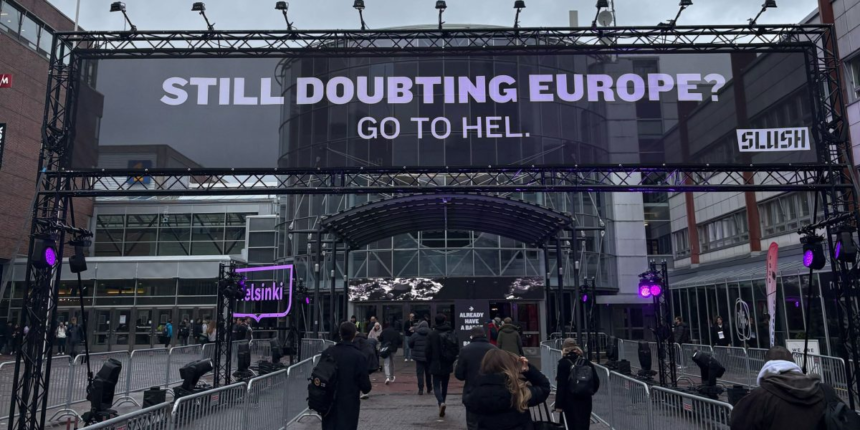
Good morning, tech reporter Beatrice Nolan here, filling in for Allie Garfinkle. I’ve just returned from Slush, one of Europe’s most startup-focused tech events. While the weather lived up to its name—temperatures dropped to a toasty 26°F—there was no shortage of founders and investors willing to brave the snow.
More than 13,000 people, including 3,500 investors and 6,000 startups and scaleups, descended on Helsinki. Of these, 80% came from European countries, mainly northern Europe, Germany and France, but also central and southern Europe.
The region has gotten a fair bit of flak over the last few years, both from investors and Big Tech companies that have taken issue with the EU’s harsher regulatory landscape, especially the commission’s AI Act, which has been blamed for stifling innovation and setting Europe back in the global AI race.
Still, European founders and investors are feeling confident—and that’s all down to talent.
“I’ve never been more bullish about Europe,” Creandum founder Staffan Helgesson said during a panel. “There are a lot of things we need to fix here, but we have great founders, investors, and talent. Europe has a talent advantage right now, with the U.S. cutting down on immigration.”
The “cost of talent” is also much lower, according to Gravis Robotics CEO Ryan Luke Johns.
“I think that some of the initiatives in the U.S. that have made it hard for foreign students to be confident moving in and getting a visa, and knowing that they’re going to be able to stay, have driven a lot of those students into Switzerland and into Europe, and that’s bringing up the talent density very, very quickly,” he told Fortune.
The AI hype was also alive and well at Slush, but founders were keen to position Europe’s comparatively quieter AI ecosystem as a positive for startups.
Later that day, Anton Osika, CEO of the Swedish AI “vibe-coding” unicorn Lovable, also credited Europe’s tech scene with a large part of the company’s rapid growth. Osika said that the fact that the AI market in Europe is not as fast-paced as the market in Silicon Valley has worked to the company’s benefit.
“Everyone kept telling me that to be successful, I had to move to Silicon Valley. I resisted that and we kept the company in Stockholm, bringing talent from the U.S. to work for us…Europe is in many ways a better place for AI development and especially for building a product company,” he said.
Nevertheless, the mood in Helsinki was a unified one: Europe’s tech ecosystem is feeling good. Or as the banner hanging at the entrance of Slush put it: “Still doubting Europe? Go to Hel!”
Beatrice Nolan
X: @beafreyanolan
Email: bea.nolan@fortune.com