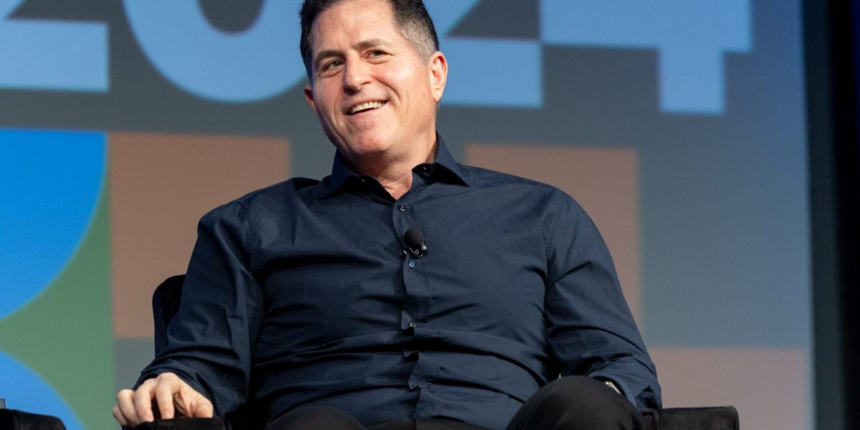
While many businesses have modest beginnings, Dell says risk-taking focused his mind.
His other piece of advice for entrepreneurs is to take feedback with a grain of salt. Instead, he says, he empowers people to trust their gut instincts on whether a new product or business idea will be successful in the long run.
“If you go and ask people if it’s a good idea, most of them will tell you no,” Dell told Fortune. “So don’t go ask.”
Dell Technologies was born from risk. Only partway into his college career, Dell had just $1,000 to invest into the business, and his manufacturing team consisted of “three guys with screwdrivers sitting at six-foot tables,” he said in Direct From Dell.
“You have to embrace risk, and you have to accept failure,” Dell told Fortune.
Dell had figured out newlyweds were more likely to buy newspaper subscriptions, so using FOIA requests, he found the marriage licenses—and subsequently, addresses—of the people he thought would be most likely to purchase a newspaper subscription from him.
“Jackpot!” Dell said in the 2021 Fortune podcast. Dell then used those addresses in direct-mail campaigns, and even hired a few friends to help him with his venture.
Growing from a dorm room operation into a full-blown tech empire, Dell remained steadfast in taking risks. By the age of 27, he had become the youngest CEO in the Fortune 500 in 1992—and by 2001, Dell Technologies became the world’s largest personal-computer maker. The company’s success in the 1990s owed a lot to what Dell learned selling newspapers, with a similarly innovative direct-marketing strategy.
Dell told Fortune that risk-taking has been his greatest advantage in business, and a downfall for other major corporations.
“Big companies generally [aren’t good at taking risks],” Dell told Fortune. “If you talk about risk, they’ll talk about the risk reduction, and the risk committee, and the risk management, and all those say the risk is bad. Well, if you don’t have risk, you don’t have innovation.”
In fact, Dell says, his company does “all sorts of things internally to promote risk innovation,” including investing billions of dollars in research and development.
“We’ve got hundreds of projects, and they’re not all going to work out,” Dell told Fortune. “That’s okay.”
A version of this story appeared on Fortune.com on February 23, 2024.