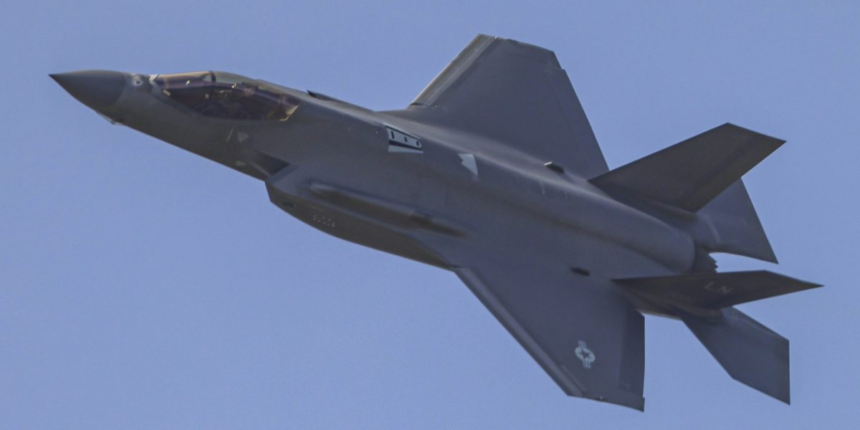
Countries seeking to retaliate against President Donald Trump’s tariffs or security policies have made the F-35 stealth fighter a ripe target.
The escalation over the F-35 deal, though, comes just days after Spain ruled out buying the F-35, saying it would instead buy the less-advanced Eurofighter or the Future Combat Air System, which is still under development as a joint program between France, Germany, and Spain. In June, Trump criticized Spain for refusing to commit to NATO’s defense-spending target of 5% of GDP by 2035.
“The recent U.S. stance in the context of NATO and the international geostrategic dimension makes us think, ‘What are the best options?’ because the predictability of our allies is a factor to be reckoned with,” Nuno Melo, Portugal’s defense minister, said in March.
Canada also said in March that it was looking at other fighter jets as political momentum grew to scrap a $13 billion deal for 88 F-35s that was signed in 2023. While Canada has committed money for its first 16 planes, it could turn to European aircraft after accepting that batch of F-35s.
The Pentagon’s F-35 Joint Program Office didn’t immediately respond to a request for comment. Lockheed said, “Foreign military sales are government-to-government transactions, and this matter is best addressed by the U.S. or country governments.”
To be sure, orders from Switzerland are small compared with Lockheed’s overall F-35 business. Hundreds of F-35s are already in use in the U.S. military and among top allies around the world. Over its production cycle, the Pentagon plans to buy about 2,400 F-35s for the Air Force, Navy, and Marine Corps, to replace aging, non-stealth fighters.
JPMorgan has estimated that the F-35 will account for 25% of Lockheed’s sales this year. In the second quarter, the company’s aeronautics sales, which include fighter jets like the F-35, rose 2% from a year ago and represented 41% of total sales.
Meanwhile, other countries have added to their orders recently, including 12 more from the U.K., 11 more from Belgium, and at least 10 more from Denmark, Lockheed said.
The Pentagon first awarded Lockheed the F-35 contract in 2001, and the program has been a perennial punching bag owing to cost overruns, delays, and its enormous price tag. After including the expenses to develop, manufacture, operate, and maintain its eventual fleet of F-35s over the fighter’s total service life, the Defense Department estimates the program will cost $1.8 trillion.
For now, the F-35 remains the most advanced fighter that’s currently available for U.S. allies to buy. It has also proven itself in actual combat missions, most recently in its use by Israel’s air force against targets in Iran.
“For all the criticism, however, F-35 still delivers significant capability in a relatively affordable way, and this is why it continues to do well in international competitions,” they wrote in a note. “Unmanned capabilities merit continued investment, but they are far from capable of replacing F-35 and may not be for some time.”